



Photo Credit: George Bakos
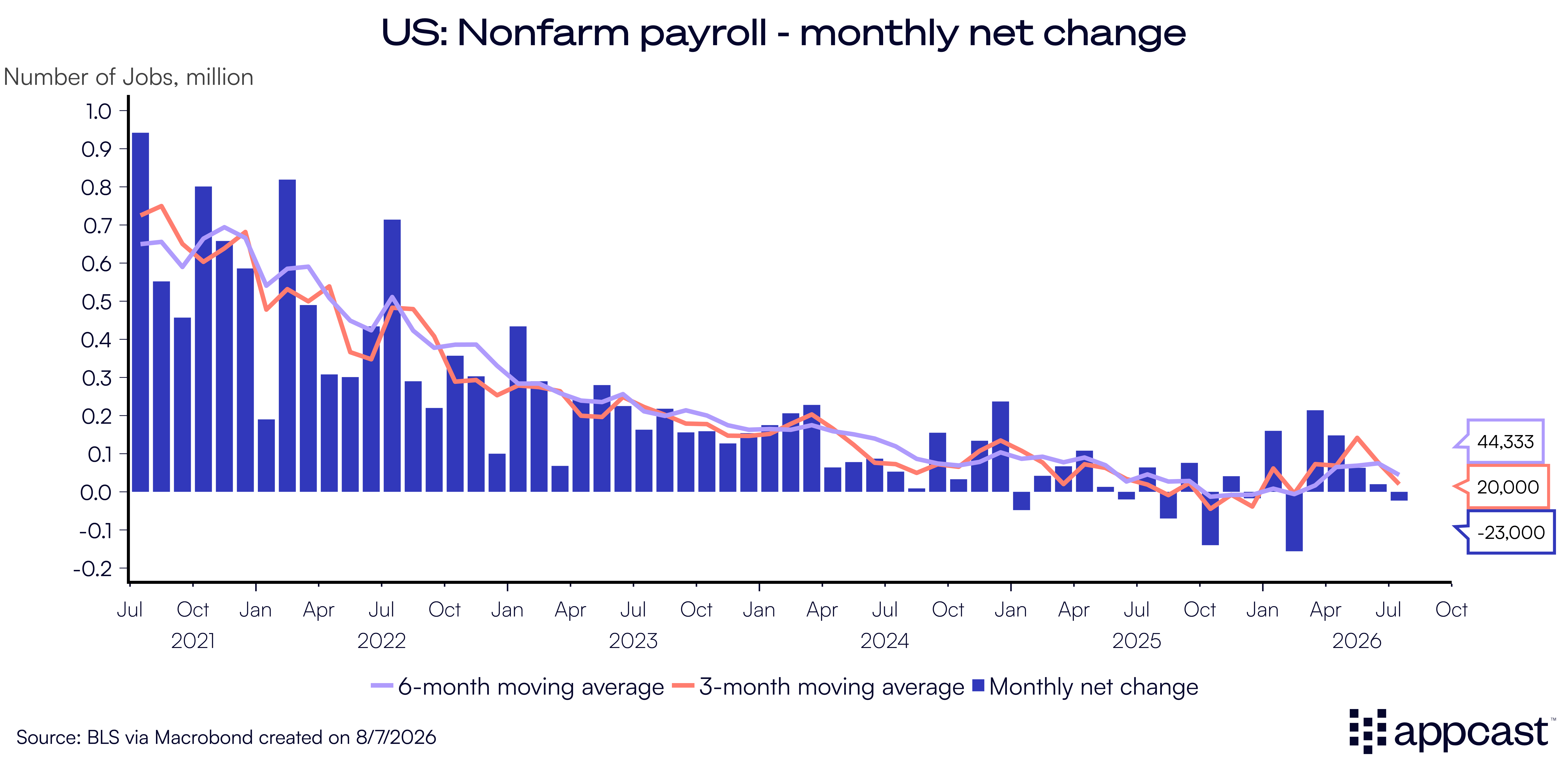
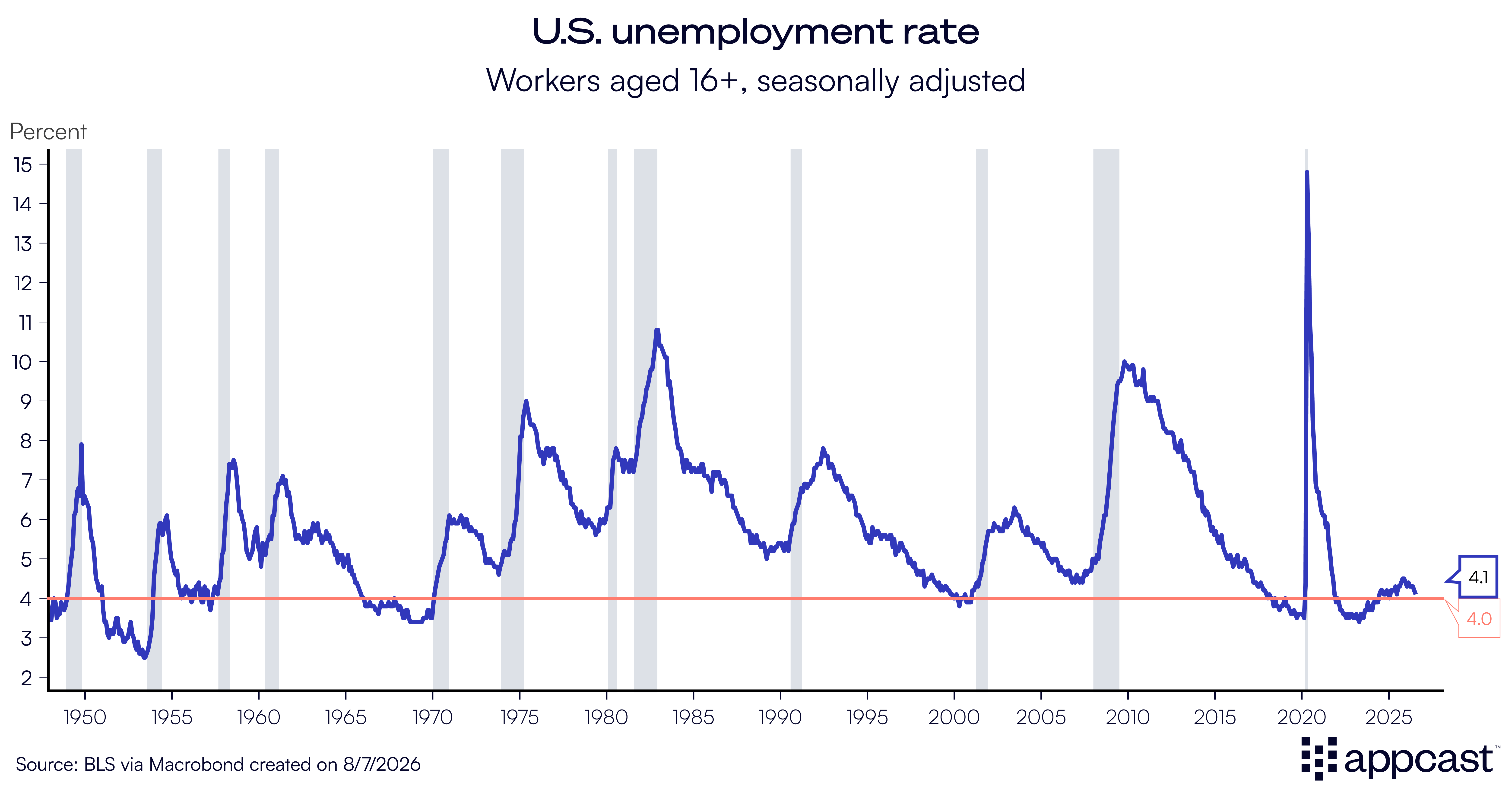
The Spring shoots of a strong job market have withered in the summer heat. The rising optimism that the labor market was perhaps strengthening took a big hit with the latest jobs report. July payroll employment declined by 23,000, a surprisingly bad reading, and yet the unemployment rate ticked down a notch, to 4.1%. On the surface, this seems puzzling: slowing job growth and less unemployment. So, let’s unpack the details to make sense of this seeming contradiction.
No hot streak for employment this summer
It’s not just that July saw negative job growth. May and June also had a combined 103,000 in downward revisions. This brought down the three-month average in job growth to 20,000. If it’s any solace, we can call the Spring surge an anomaly and this new subdued trend merely reversion to the mean — consistent with the state of the labor market in the winter.
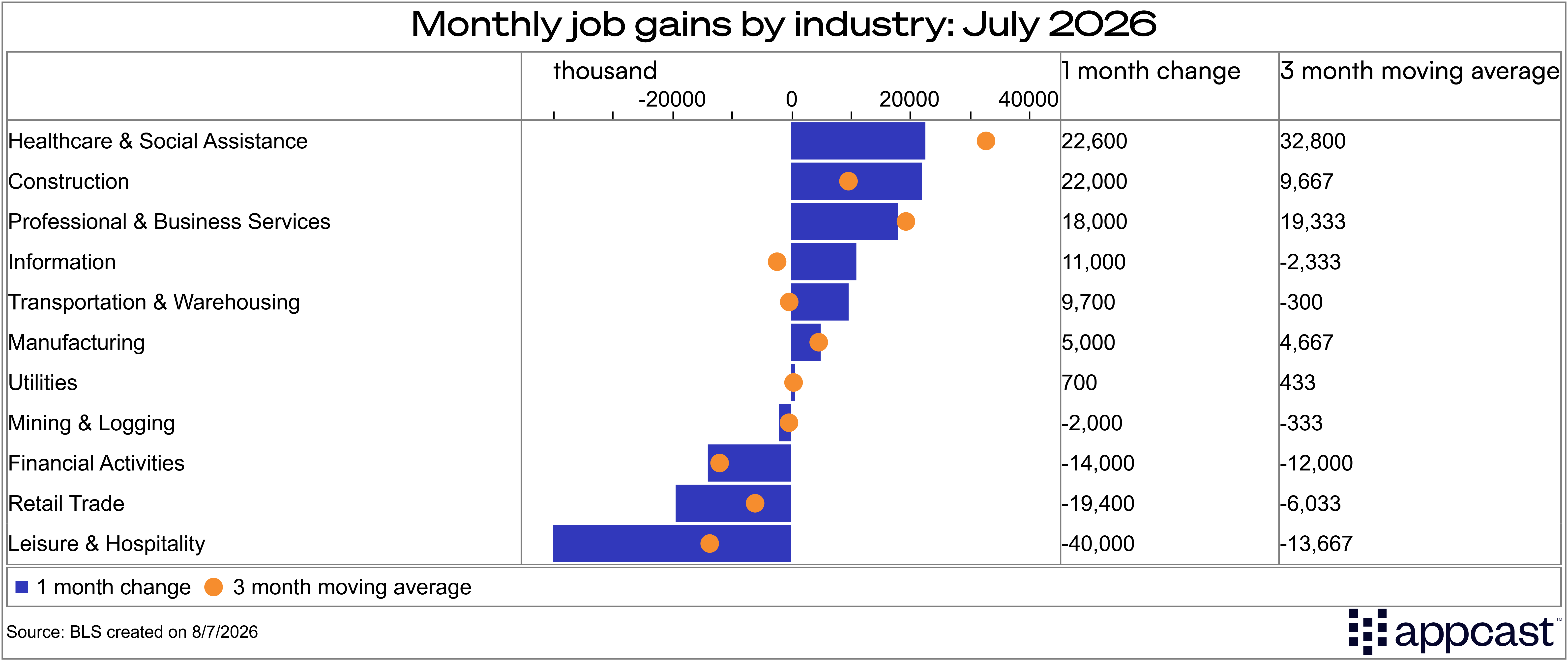
Local government jobs were the main drag, declining 50,000, which could be due to seasonal distortions (due to educators largely being out of work for the summer). Retail lost 19,000. Financial activities jobs were down 14,000.
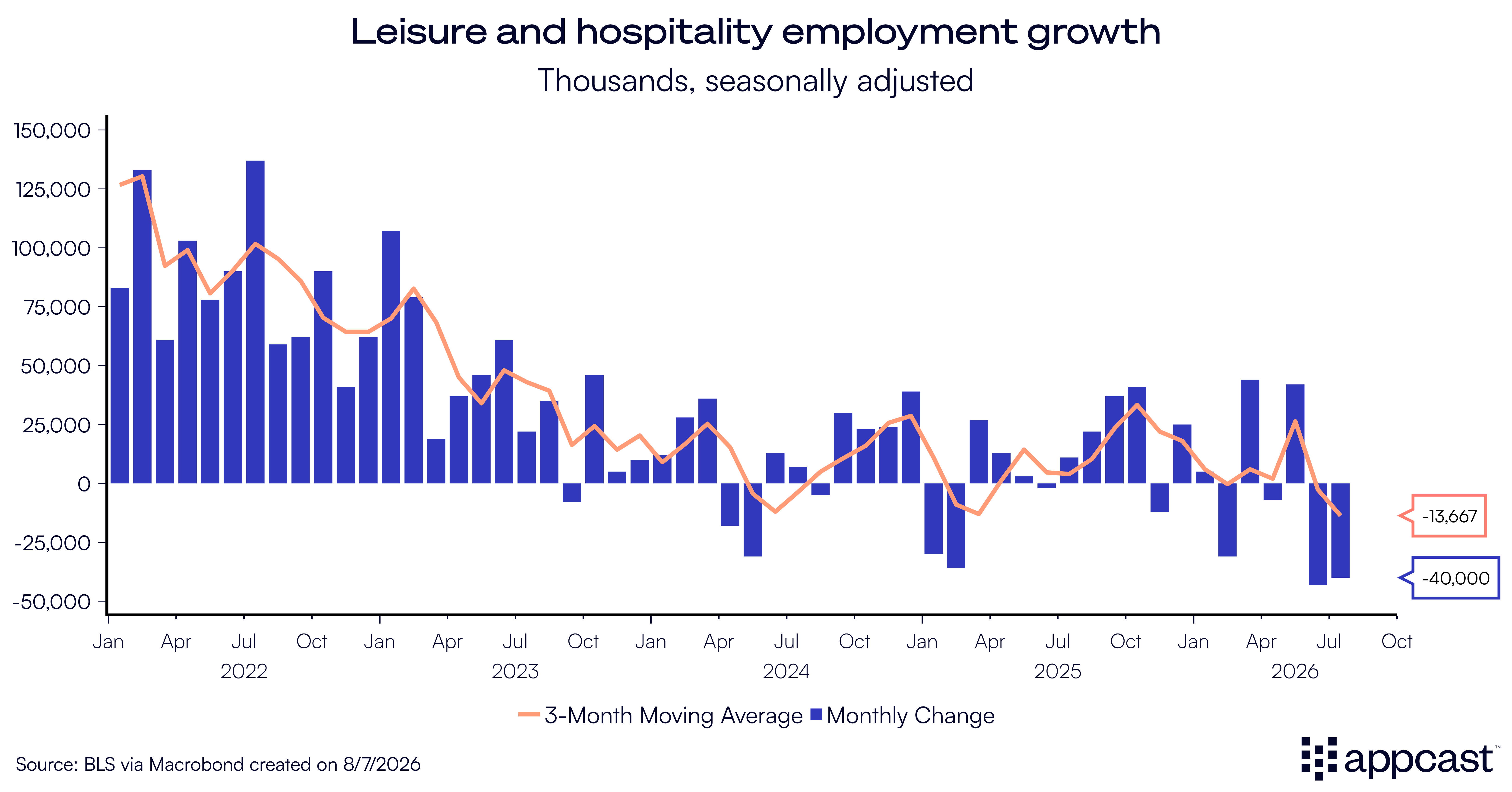
Leisure and hospitality has been at the epicenter of the summer swoon — losing over 80,000 jobs in June and July alone. This is very much contrary to expectations, with many reports anticipating a World Cup boom, which clearly did not materialize.
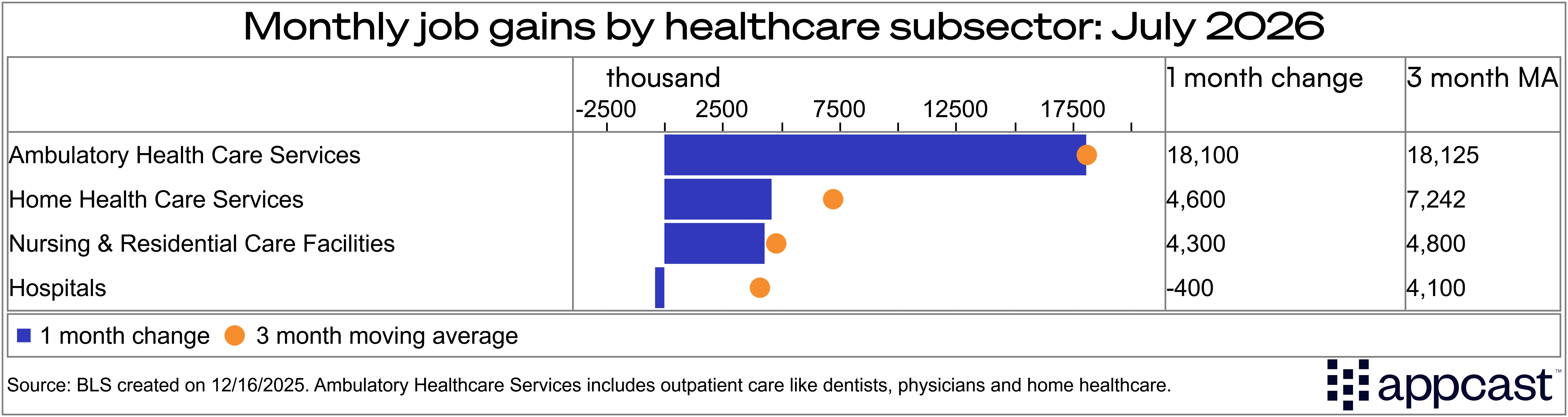
And healthcare — long the stalwart industry of the job market — posted a lackluster gain of 22,000 in July, which is far below its average over the last year; this was driven by a decline in hospital hiring (-400), which could be related to looming Medicaid cuts.
Labor force shrinking alongside weak job gains
The unemployment rate ticked down, but for “bad” reasons — because the labor force shrunk. In other words, fewer people are bothering to even look for work. That could be either because they’re discouraged in this tough market for those without a job, or because of broader tightening in the pool of workers, such as through immigration policy.
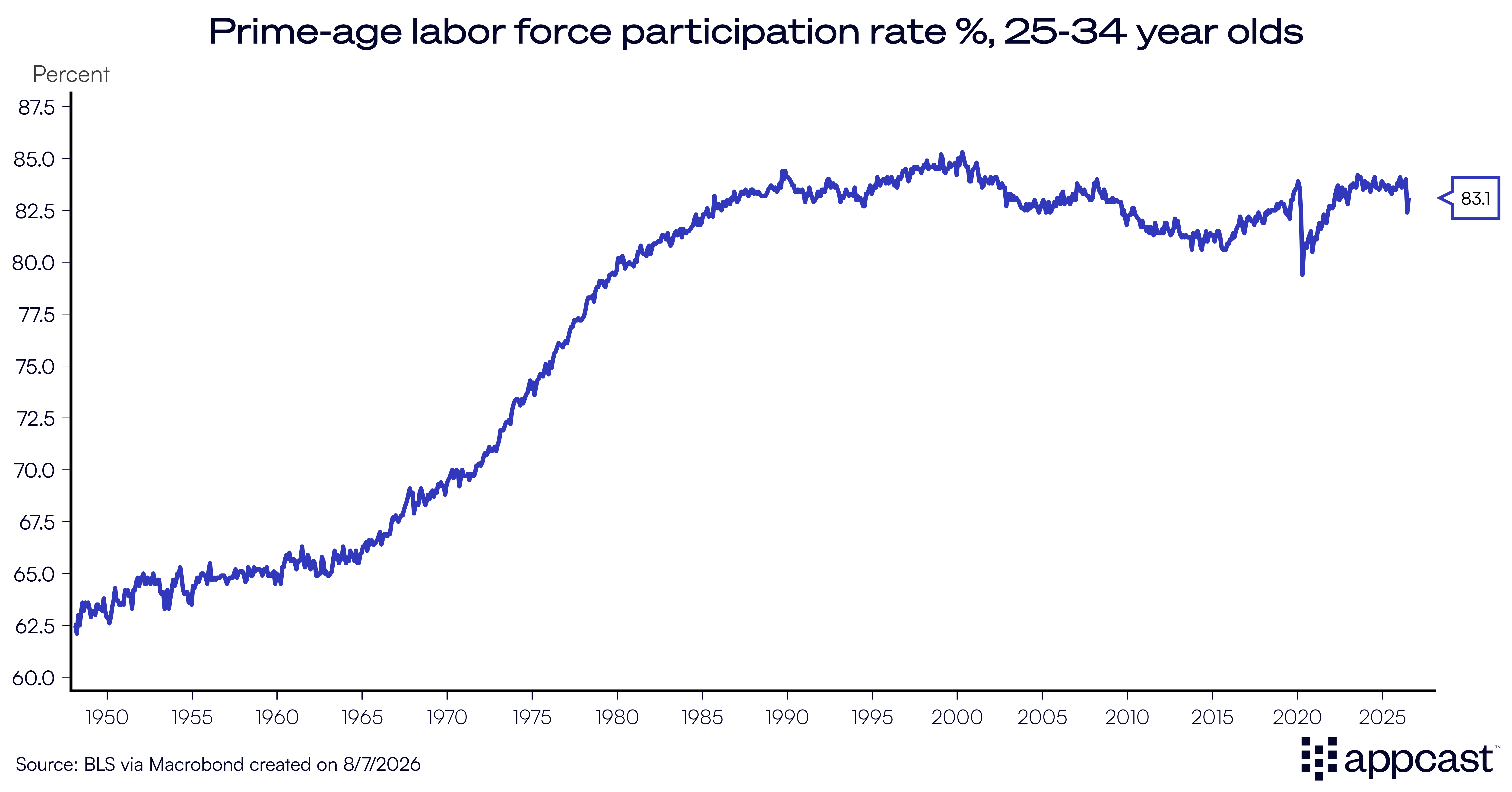
Other measures of the labor force were more subdued. For prime-age workers, both the employment-to-population ratio and the labor force participation rate bounced back in July, to 80.4% and 83.4%, respectively. These increases in the share of prime-age adults with a job, or at least looking for one, are encouraging — but they come on the heels of steep falls in June. But we did not see a rebound in the sharp drop for younger adults, those 25-to-34 years old.
The sharp drop in the labor force participation rate for younger professionals (25-to-34 years old) remains a worry. Economists at the Federal Reserve Bank of Minneapolis recently reported that this drop may be explained by a large increase in layoffs among these workers, resulting in many leaving the labor force altogether.
So overall, the labor market seems to be tightening from a supply perspective. Yet despite that, wage growth slowed to 3.2% year-over-year, a sign that the pool of job seekers may be falling faster than job growth is decelerating, perhaps related to more restrictive immigration policies.
What does this mean for recruiters?
This is a puzzling jobs report, honestly. Overall job growth has receded from its surge earlier this year, as most industries outside of healthcare and construction remain weak. Yet, unemployment is falling because there are fewer people looking for work. If you are a recruiter hiring for specialized front-line roles like HVAC technicians or healthcare specialties, competition likely remains elevated. But, if you’re hiring for hospitality or service workers like bartenders or waitstaff, demand is likely below its peak several years ago since the World Cup did not significantly boost hiring. In summary, the labor market is back in a state much closer to 2025: a low-hire, low-fire environment.