



Photo Credit: Library of Congress
The U.S. added a whopping 178,000 jobs in March despite the Iran war raising energy prices and spooking financial markets. The unemployment rate ticked down slightly, to 4.3% from 4.4%. Recent months have had unusually large swings in employment – a choppy trend that obscures baseline conditions of a low-hire, low-fire labor market.
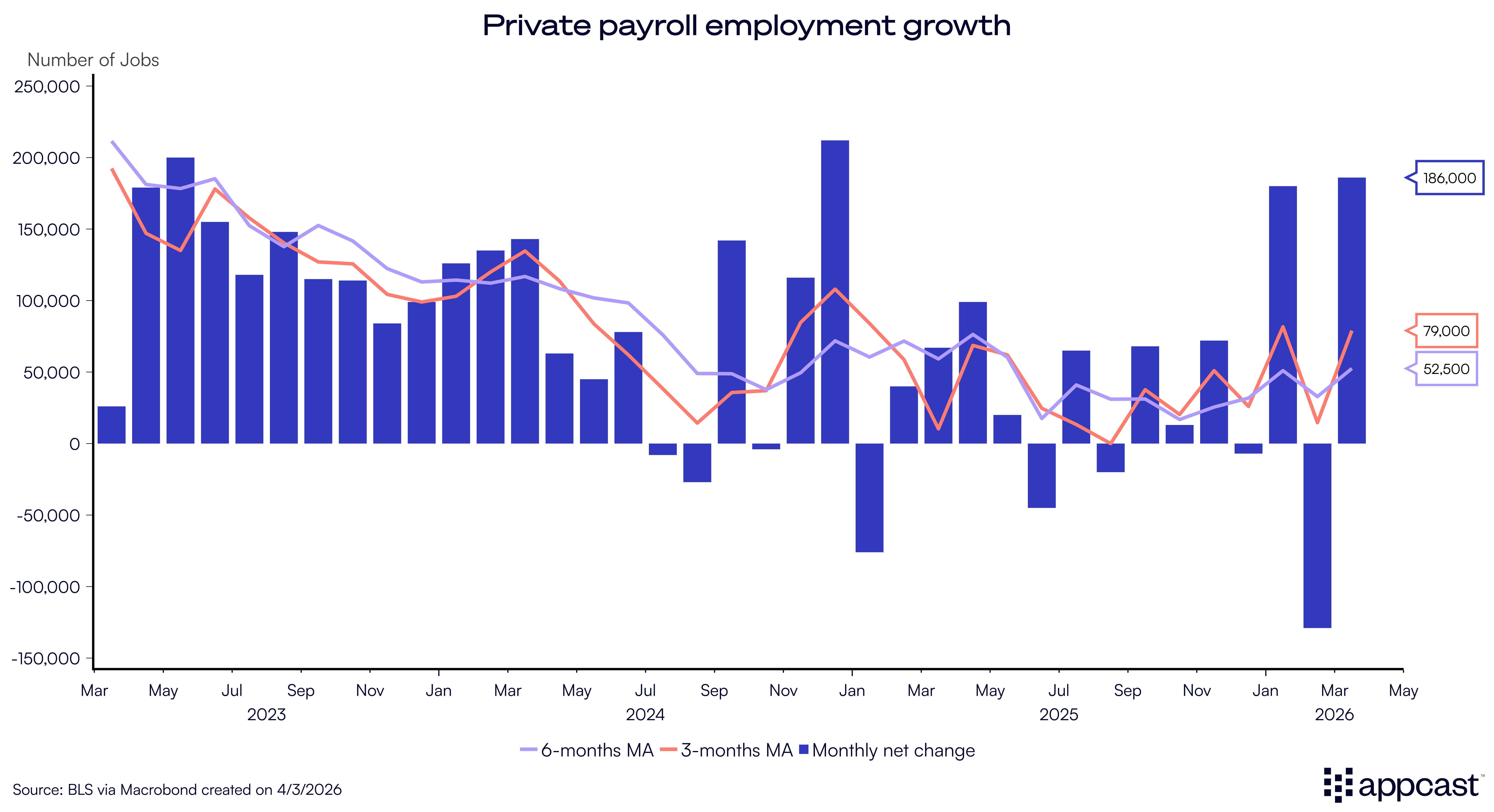
You can’t be blamed for feeling whiplash — the February headline figure, already the worst report since the pandemic, got revised down to a loss of 133,00 jobs. The federal government shed 18,000 jobs; so, focusing on just the private sector shows a gain of 186,000 last month. Part of this is a correction in the healthcare sector, which lost 29,000 jobs in February, in part due to a strike. Now that it’s resolved, healthcare bounced back strongly — adding 90,000 jobs. Private payrolls show a slight upward trend since “Liberation Day” last April, when the Trump administration announced widespread tariffs. The current underlying pace of private job creation is about 53,000 on a 6-month moving average. This is at, or perhaps slightly above, breakeven job growth. So not too bad, and definitely not recessionary.
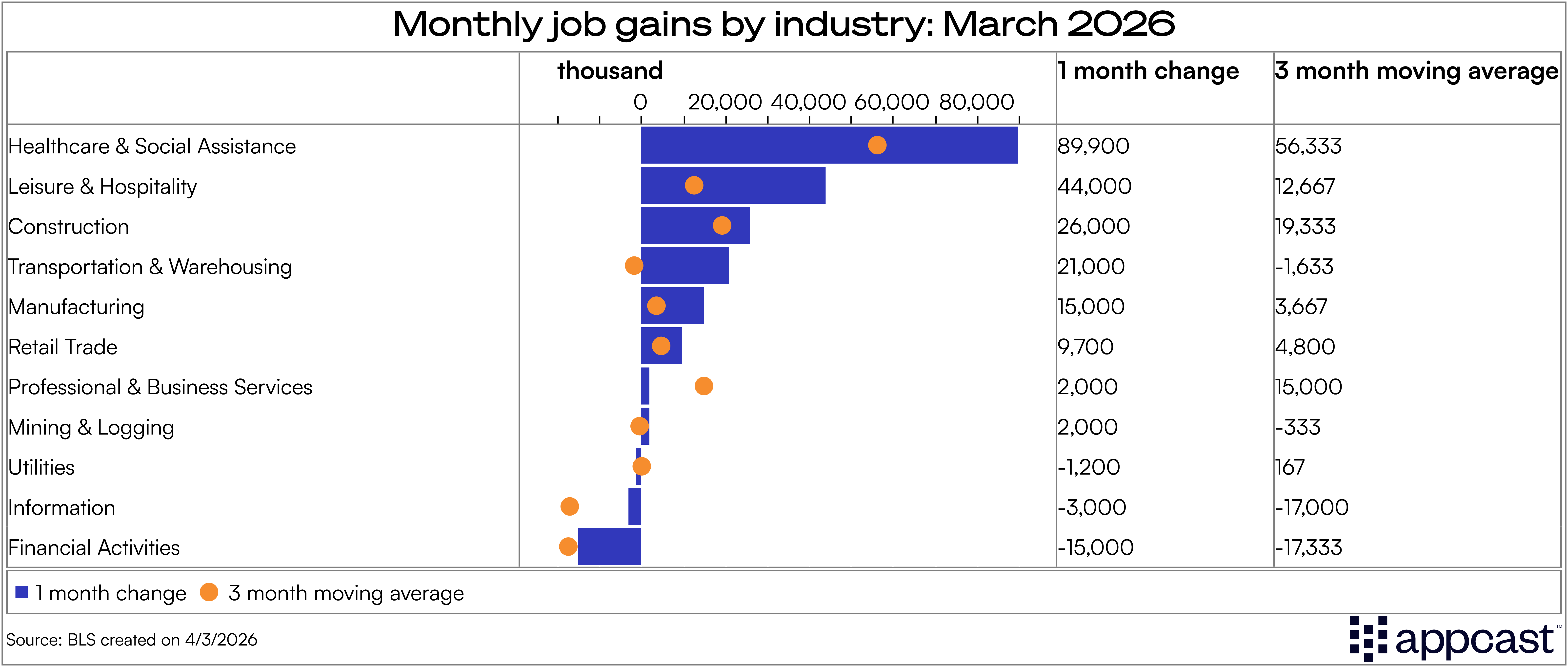
Leisure and hospitality had the strongest month of job growth in 2 ½ years, with a gain of 44,000 jobs. Construction added 26,000 jobs, perhaps a bounce back tied to weather-related distortions in February. Overall, the story of hiring remains as in recent months: healthcare and construction are the main drivers of job growth. Every other industry is flat or down.
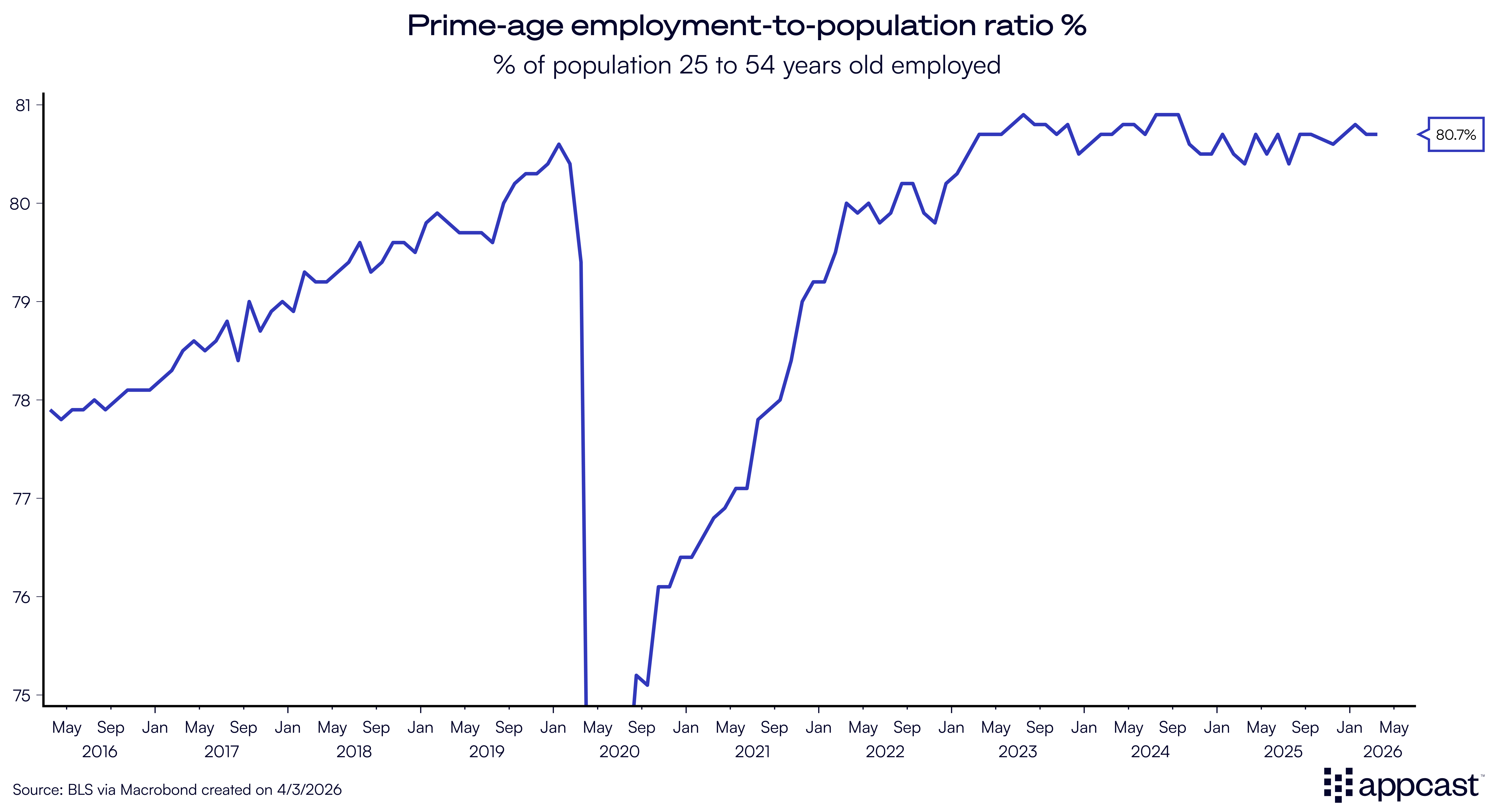
The word resilience gets thrown around a lot, but it’s merited. Despite the rollercoaster readings of recent months and the Iran war triggering deep economic turbulence last month, the underlying labor market trends over the past year have persisted. Job growth is slowing, yes, but not in freefall, thanks to healthcare. And as for workers, the prime-age employment-to-population ratio is holding steady at 80.7%, basically unchanged for three years. So, despite hiring being weak, layoffs haven’t materially increased. The “low-hire, low-fire" economy continues.
What does this mean for recruiters?
March’s job figures were a strong rebound from a particularly weak February, but the longer-term trend of concentrated employment growth continues. Recruiters hiring in healthcare and construction still face lingering labor shortages as immigration policy has tamped down labor supply. Recruiters hiring traditional white-collar roles like accountants, finance or administration are likely still seeing lowering needs with a greater pool of available talent.
The question going forward is how more resilience the labor market has under pressure from higher energy prices due to the war in the Middle East.