

Photo Credit: Aron Van de Pol
GDP continues to grow…
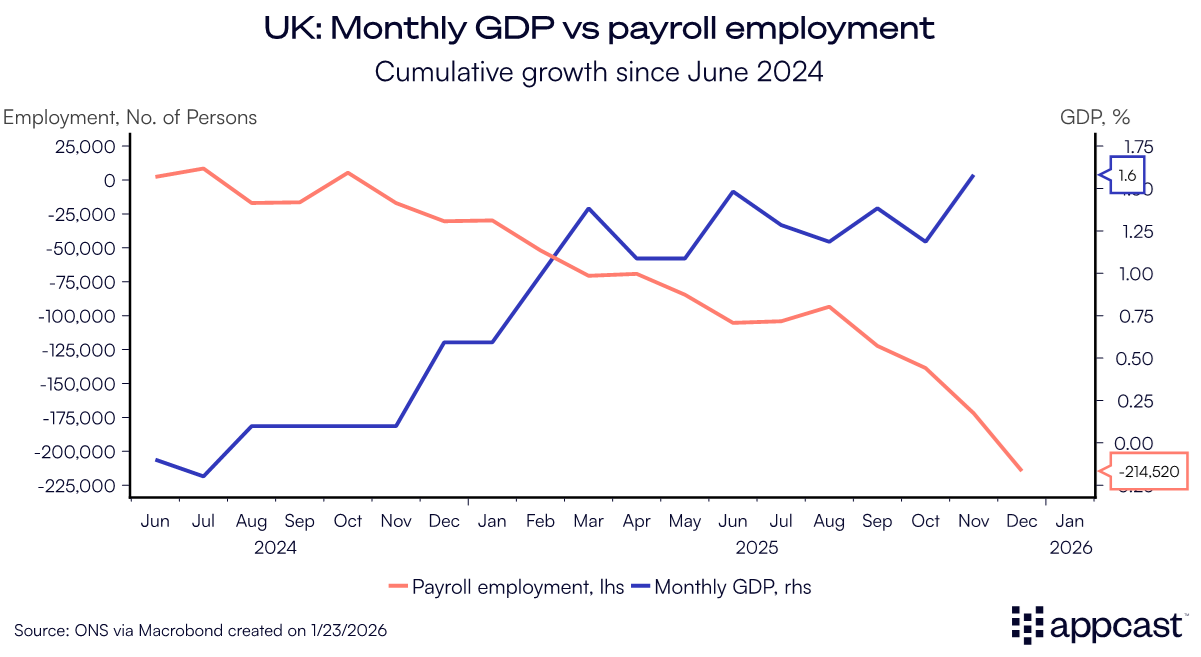
Without a doubt, both economic sentiment and consumer spending have been weak in the U.K. since the pandemic. Nevertheless, economic growth has been okay — expected to come in at 1.3% for 2025. Furthermore, forecasters are anticipating a slight increase in economic activity this year, though risks are probably skewed to the downside, given how volatile the global geopolitical situation currently is.
…but employment is down
Despite a growing economy, though, the labor market continues to weaken. The successive minimum wage hikes together with the increase in National Insurance (NI) contribution — effectively a tax hike — have led to surging employment costs, with predictable effects for employment: more than 200,000 jobs have been lost since June of 2024.
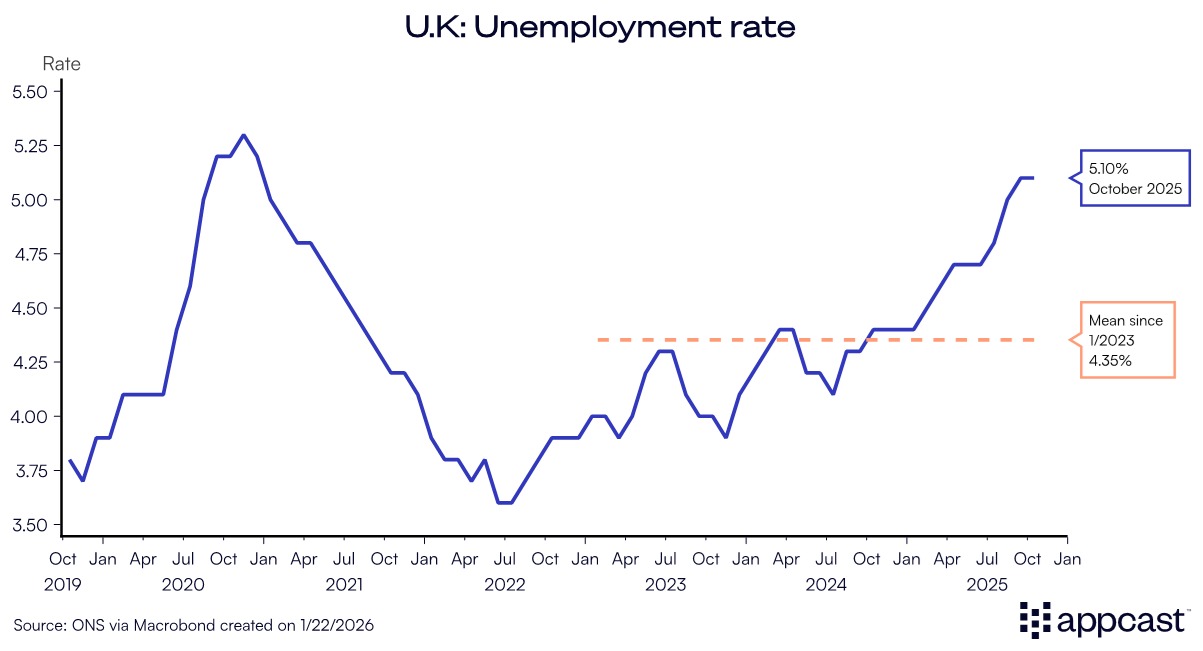
The unemployment rate increased to about 5.1% in Q4. While some of this is due to more people looking for work, employers have continued to shed jobs, particularly in retail and hospitality. With profit margins typically low in those sectors — think pubs, restaurants, and High Street — some businesses had little choice but to lower headcount.
Younger workers continue to suffer
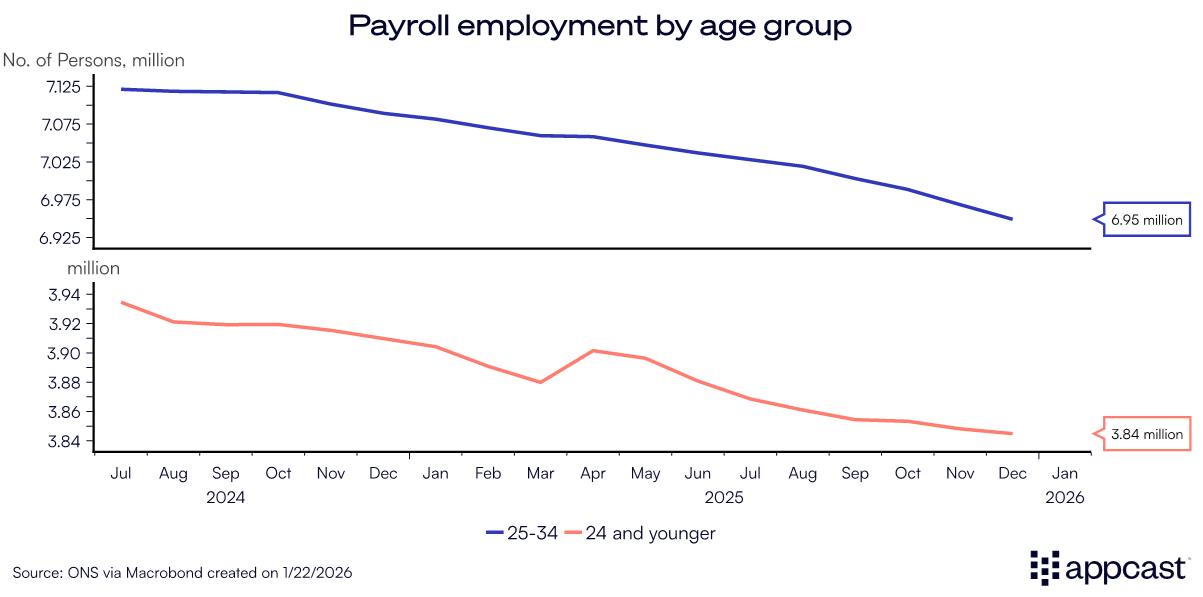
The combination of AI adoption together with a weak macro environment has created a very tough labor market for young people entering the workforce. Hiring for junior and entry level roles has plummeted. Many companies, especially in the white-collar space, have used AI as a rationalization to cut graduate roles. As a result, youth unemployment has risen significantly faster than aggregate unemployment. And payroll employment losses have been concentrated in the 24 and younger and 25 to 34 years old age groups; younger workers therefore account for a significant share of the job losses that have occurred since 2024.
Higher productivity: one upside?
Low productivity growth for many years is the main reason for the stagnation in living standards in the U.K. The recent combination of higher GDP and fewer jobs, though, implies a productivity boost: we produce more stuff with fewer workers. Research from the Resolution Foundation shows that productivity might have exceeded 3% since Q2 2024, faster than official numbers suggest.
While too early to tell for sure, this could be the very early signs of an AI boom, as business investment has increased. Alternatively, the recent rise in insolvencies might have bankrupted low-productivity businesses (zombie firms).
Either way, faster productivity growth could help the U.K. overcome its economic malaise.
What does that mean for recruiters?
The U.K. labor market continues to weaken for now, providing ample candidate supply for most roles — though hiring for specialist and experienced positions might still be difficult. Do not expect this to last forever, though. Two factors weighing on the labor market — the minimum wage and NI hike — are probably in the rearview mirror as most employers have done the necessary adjustments. Furthermore, the increase in productivity makes me cautiously optimistic that future growth might be modestly higher than expected, thanks to the AI boom. While it’s too soon to be certain, the massive surge in the demand for AI skills suggests that the labor market is changing. Employers should adopt their talent attraction, talent retention, and employee reskilling strategies accordingly.


