


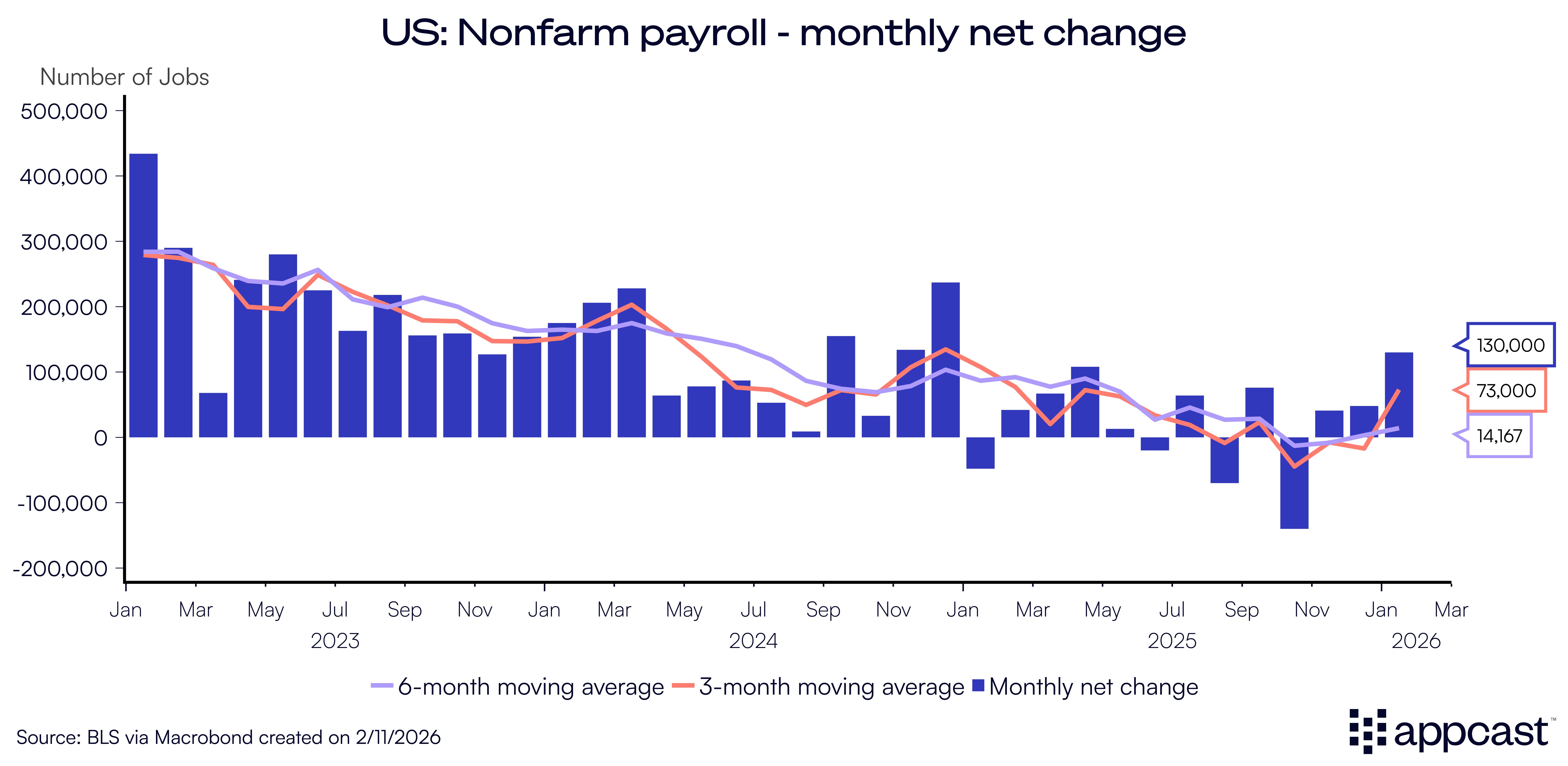
January’s jobs report suggests a strong start for 2026 and a needed rebound from a weak 2025. Nonfarm payrolls rose by 130,000, unemployment fell slightly to 4.3% and the employment-to-population ratio rose to a near-high of 80.9%, all hallmark signs of a positive jobs report.
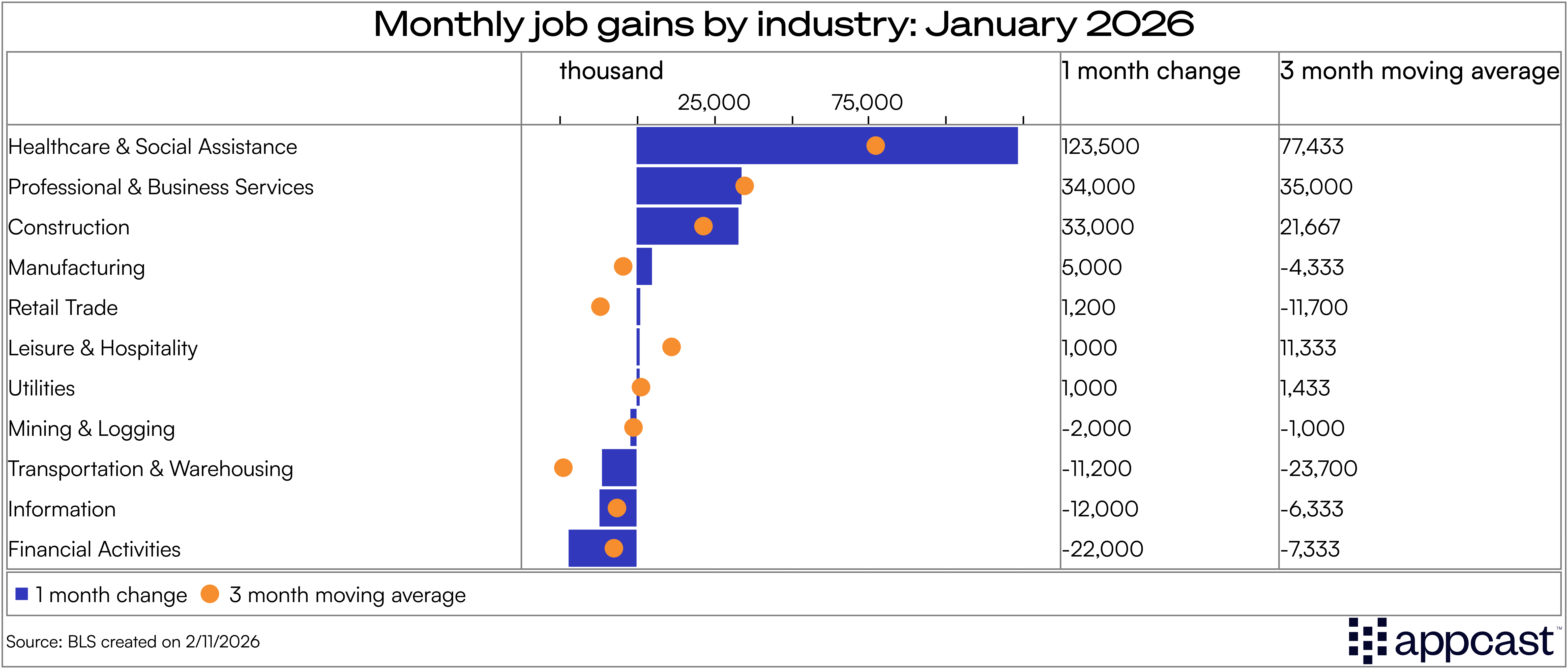
Yet the trend of concentrated job growth continues as Healthcare & Social Assistance account for 95% of private payroll growth. Outside of Healthcare and Construction, there’s little hiring demand across the economy.
Furthermore, the annual benchmark revisions were released this month, a standard process in which the Bureau of Labor Statistics matches previously released data against a universal count of employment records from the Quarterly Census of Employment and Wages (QCEW). The total employment level was reduced by 862,000 (not seasonally adjusted) for March 2025. Furthermore, monthly job growth throughout 2025 declined from 49,000 to just 15,000. In simple terms, job growth was lower than we previously thought.
Industry Breakdown
Healthcare & Social Assistance continue to dominate the labor market, adding 123,000 new jobs — the strongest month for job growth since the immediate recovery from the pandemic in 2020. Within the sector, Ambulatory Healthcare Services, which is mostly comprised of outpatient care services, added 50,000 new jobs.
Construction had a solid month as well, contributing 33,000 jobs to overall growth. Within the sector, nonresidential specialty trade contractors added 25,000 jobs, likely due to the AI data center boom. Manufacturing, a sector that has been stagnating under trade policy pressures throughout 2025, also had its first positive month of growth since November of 2024.
Outside of the two sectors above, job growth is anemic at best. In “sitting down” sectors like tech, job growth has virtually been nonexistent. A theory gaining increasing traction among economists — including myself — is that hiring demand is lower due to AI-driven productivity growth.
Labor Force Insights
On the household survey side of the jobs report, we notice several positive indicators following worrisome softening trends in 2025. For one, the overall unemployment rate ticked down to 4.3% after rising steadily for the past twelve months. Joblessness has been concentrated in younger workers (16–24-year-olds) and Black Americans, but both groups’ unemployment rates dropped in January.
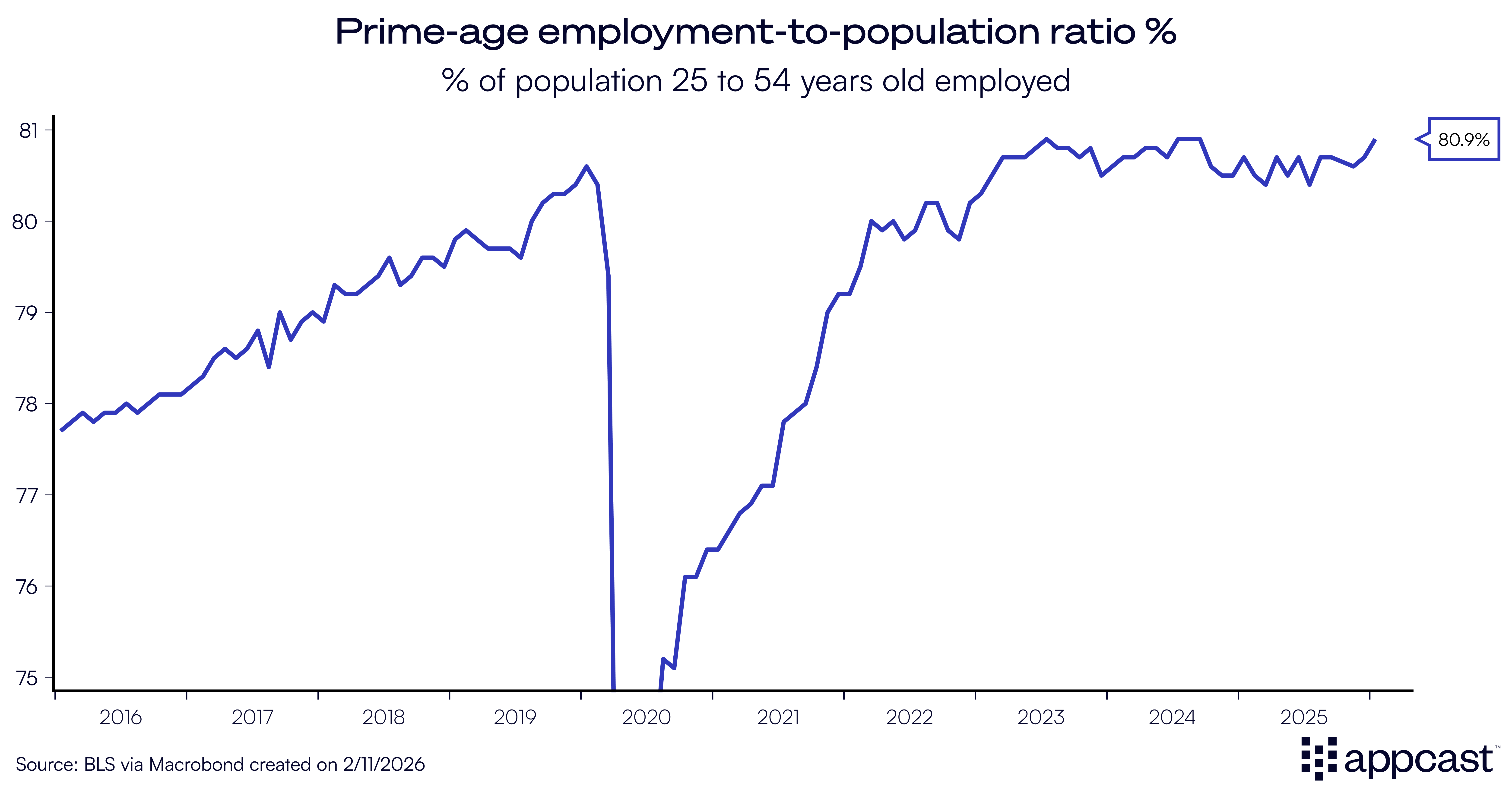
The most promising development was the rise of the prime-age employment-to-population ratio to 80.9%, meaning the core of the labor force remains engaged and willing to work.
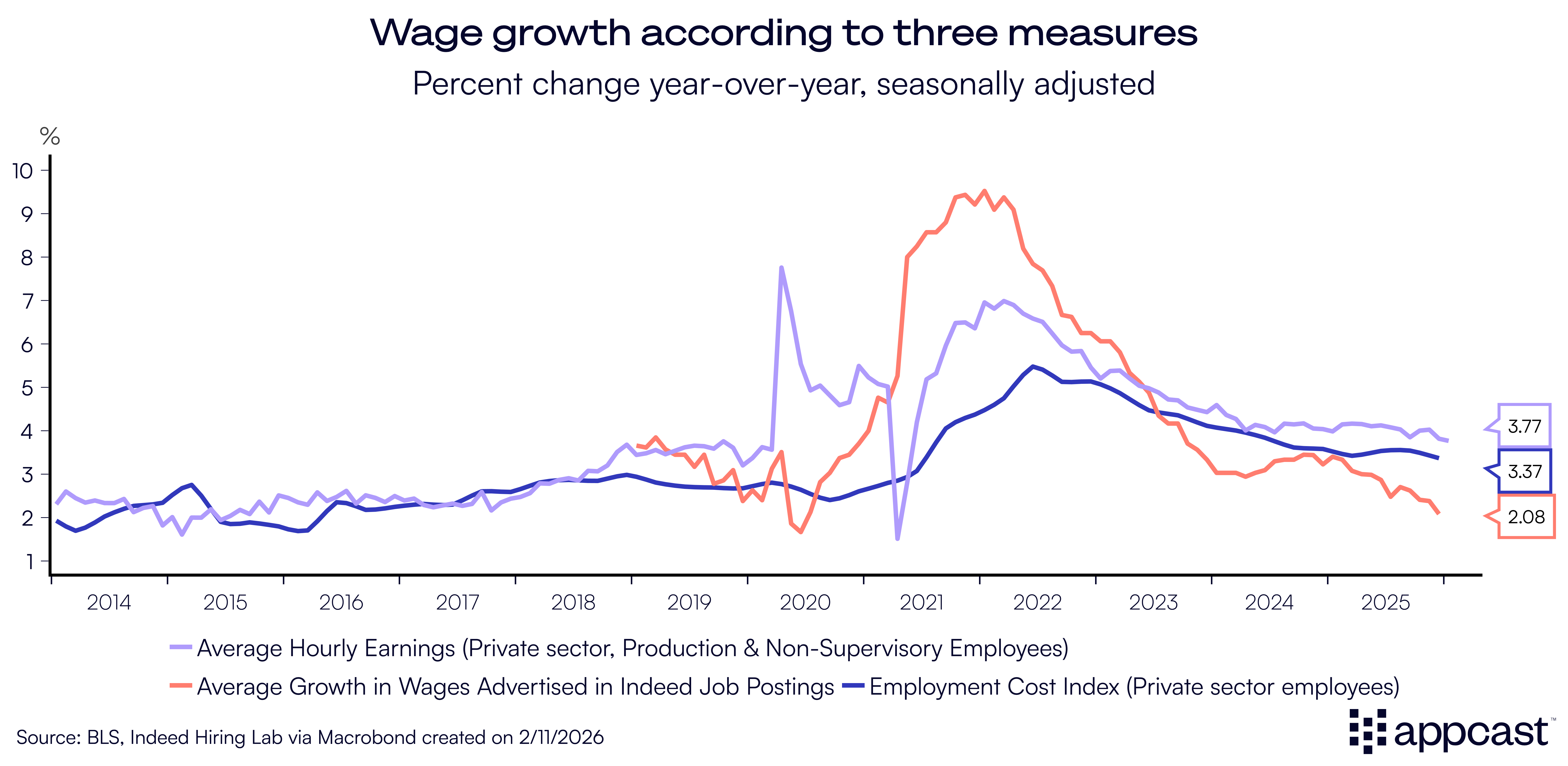
Given the drop in unemployment and surprisingly strong job growth, the dynamics behind demand (hiring) and supply (workers) shifted in favor of workers this month as wage growth rose at a solid pace of 3.8% for non-managerial workers. Recruiters may anticipate higher wage expectations for skilled trades and healthcare workers over the year as immigration restrictions may renew some modest labor shortages.
What does this mean for recruiters?
The labor market is now tighter than we thought, particularly in skilled trades & healthcare. Immigration restrictions reducing labor supply are starting to have a greater impact, reducing workforce supply. Slower population growth in 2025 combined with an aging population means fewer workers are available to the sectors that need to grow. These headwinds, along with external factors like immigration policy and AI, suggest ongoing hiring challenges that will continue to demand flexibility and awareness from recruiters in 2026.