


Photo credit: Matt Paul Catalano
A Jobs Tsunami in October
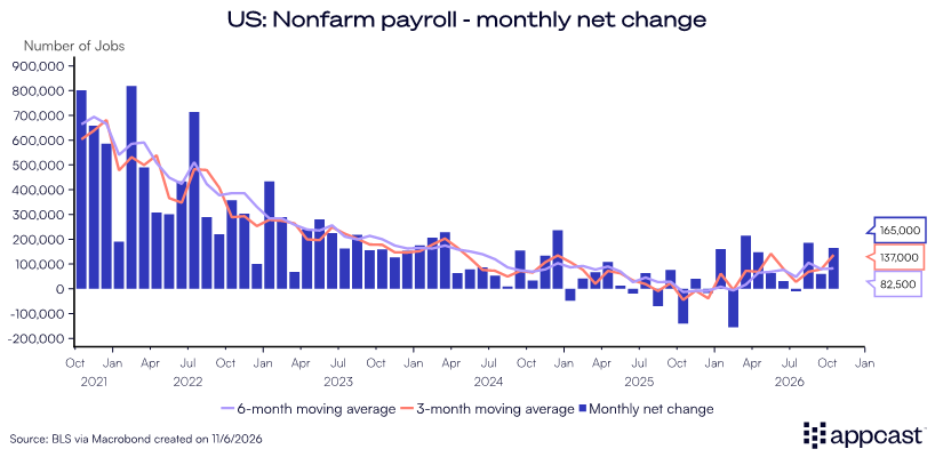
The U.S. labor market is reaccelerating. The October jobs report beat expectations by a massive margin: adding 165,000 jobs, about 100,000 above the consensus forecast. On the heels of the blowout midterm election results, we’ll cheekily call this the second “tsunami” of the week.
Reaccelerating job growth
The six-month moving average of job gains is at 83,000, which is far above the “break-even” rate to keep up with the (albeit subdued) labor force growth in recent years. This is a clear upshift from the near-zero trend in the Fall of 2025.
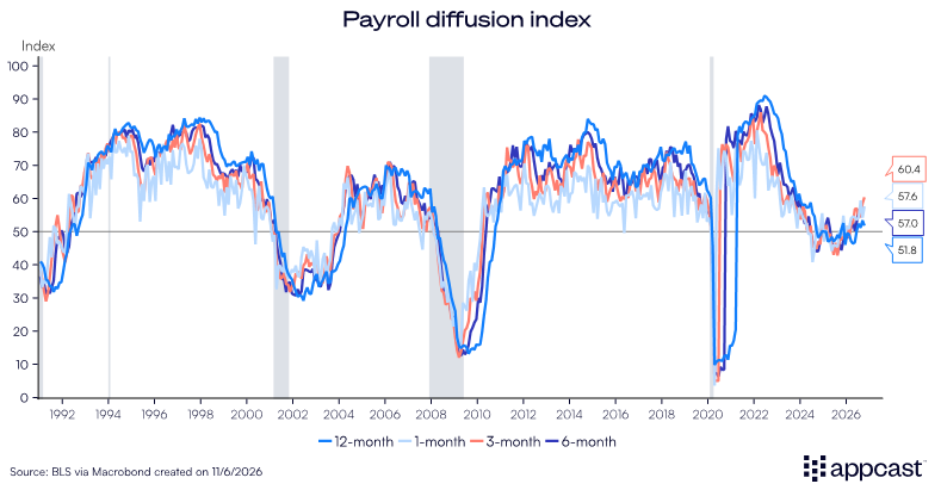
Perhaps more impressive than the level of job gains is how widespread they were. The so-called “diffusion index” – which measures the breadth of industries adding jobs, minus those contracting – rose to 60.4 on a three-month basis. So, effectively, 80% of industries are expanding payrolls, compared to roughly 20% that aren’t. This is the broadest growth in jobs in over three years.
Thawing of white-collar industries?
The shocker in the jobs report is that professional and business service employment rose 70,000 and is now averaging gains of 36,000 over the past three months. This is the strongest monthly gain since 2022. What drove it? Read on below to see how recruiters, H.R. professionals, and others tied to “employment services” (like Appcast) were instrumental.
If this trend holds – a big if – it’d be a clear reversal in the narrative of lackluster white-collar hiring. Alongside a strong rise in software developer job postings over the past year, it’s worth pausing to contemplate: is the strong, multi-year cyclical downshift in job gains for “sitting-down” jobs at an inflection point?
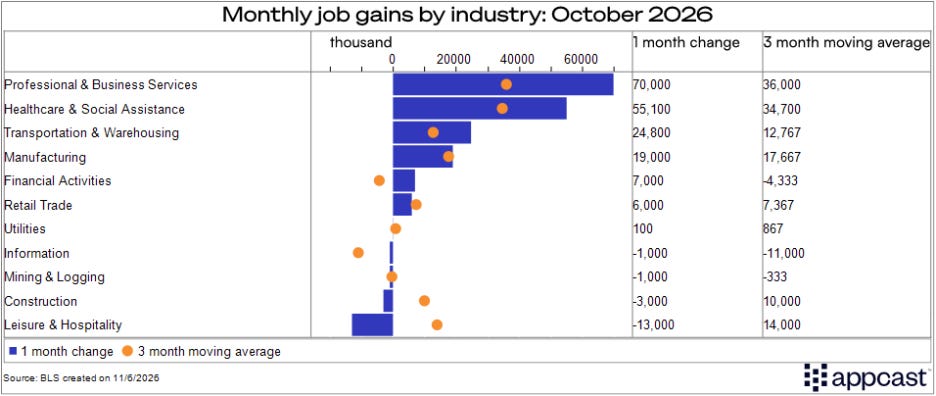
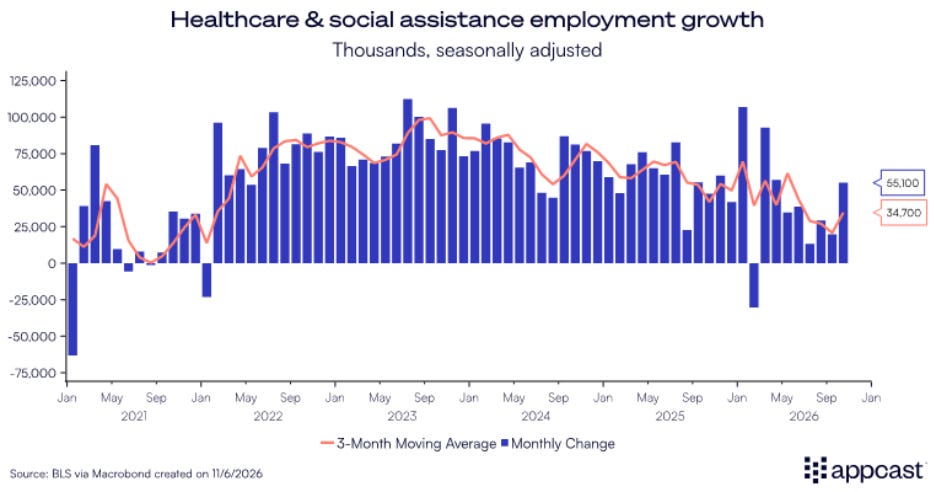
It wasn’t just white-collar jobs that grew in October. Healthcare added 55,100, a continuation of its stalwart growth in recent years. If anything, it was a return to the 50-to-60 thousand jobs per month range we had grown accustomed to.
Besides healthcare, the other strong tailwind recently – the A.I. data center buildout – had a mixed showing in this report. Manufacturing jobs were up 19,000. But utilities and construction both lost jobs in the month. That said, digging into the sub-industries within construction, the nonresidential building and specialty trade contractors’ categories did gain jobs.
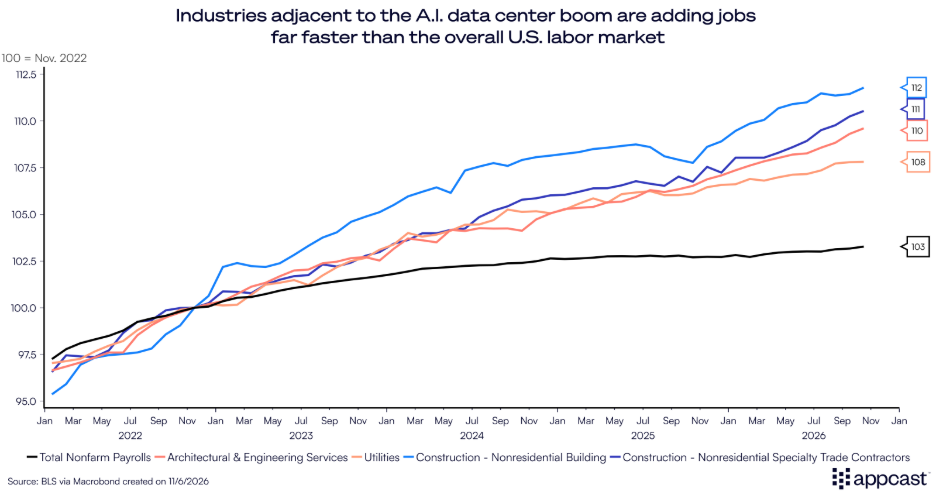
The other industry somewhat associated with the data center boom – transportation and warehousing – did gain nearly 25,000 jobs, but it was mostly in the couriers and messengers category – so unlikely to be A.I. related. Now, given this week’s midterm election results, and the likely anti-A.I. regulatory backlash anticipated, it’s likely these data center related employment tailwinds will only last for so long.
One worrisome sign: longer unemployment spells
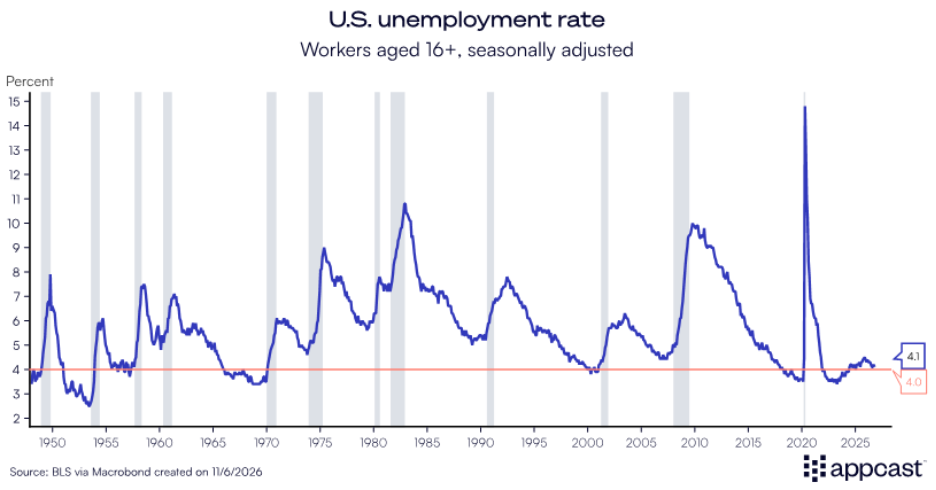
The unemployment rate declined slightly to 4.1%, which now markets five consecutive years with the unemployment rate at or below 4.5%, the longest streak since 1948.
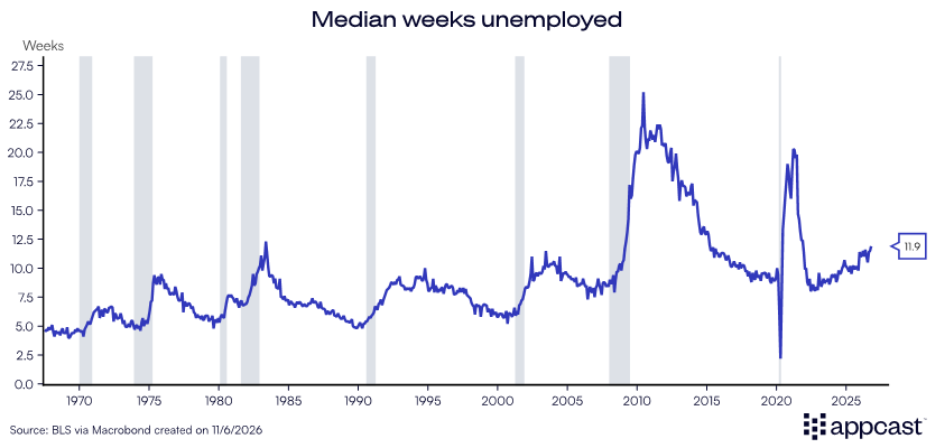
While overall joblessness isn’t a major problem, there is one area of concern that those without work are finding it difficult to land a job. The typical weeks unemployed is up to 11.9, the highest since 2014. So, this reflects a strong insider vs. outsider market. Despite the broad base of industries hiring, if you’re unemployed and don’t have skills tied to the healthcare/data center construction boom, then you’re probably going to have a longer spell of joblessness.
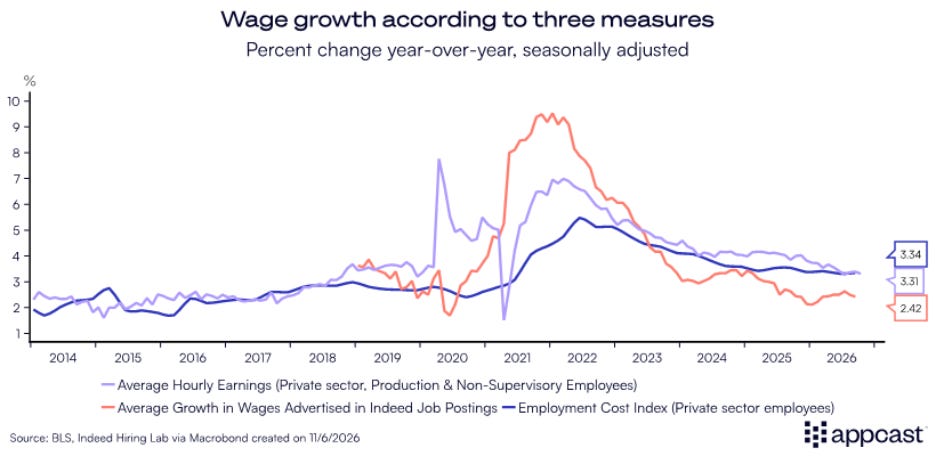
That said, for those with work, wage growth is picking up. Frontline workers – non-supervisory employees – seeing nominal increases of 3.3% year-over-year, but over the past three months that’s rising at an annualized rate of 4.1%. For construction workers, in particular, wage growth is accelerating (cough... data center boom).
What does this mean for recruiters?
Back to the point about professional and business services posting such a strong gain of 70,000 jobs: the sub-industry that led the charge was “Employment Service,” so staffing agencies and placement firms, which in total comprised 20,000 of the overall gain. No, it’s not just a return to employment in employment industries, but also job postings for HR professionals, according to Indeed data. Such postings are up 15% year-over-year.
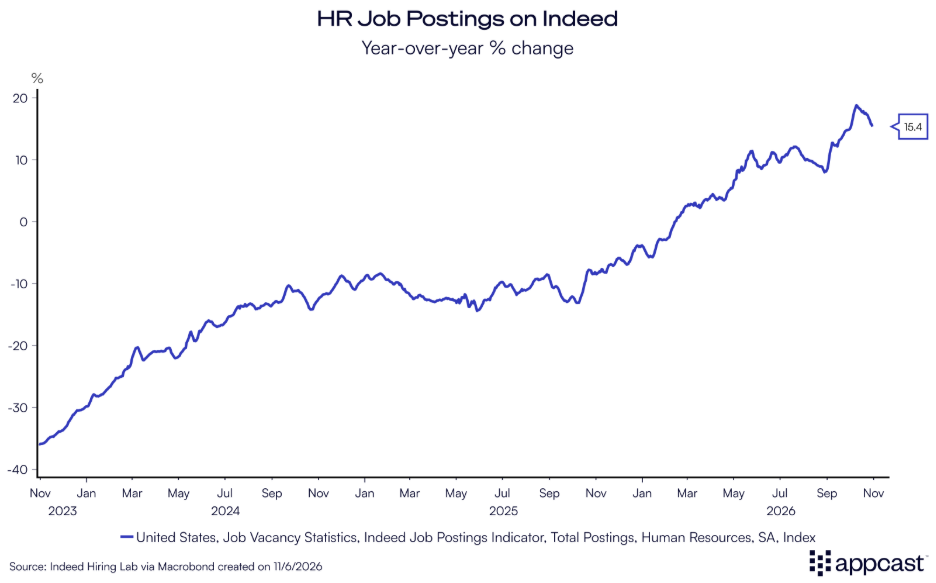
In conclusion, the labor market is more than holding its own. Recruiters should expect more competition, and it to be more broadly spread across industries; and, heck, they may see more competition for themselves. So, the labor market is expanding, and not just from healthcare and A.I., according to the October jobs report. While it’s too soon to say, it’s possible the white-collar hiring freeze is at a turning point.