

The U.K. labor market continues to shed jobs despite the solid GDP report earlier this month, where growth surprised on the upside. The job losses remain in industries that are untouched by artificial intelligence: retail and hospitality. Instead, it is a rather hostile business environment paired with sluggish consumer spending that is weighing on these sectors. The Burnham government will need to turn this ship around as quickly as possible. Speculation about the next Labour Budget — scheduled for October 28 — is not exactly helping. The previous Labour government implemented policies that have contributed to the job losses in recent years. Whichever direction the next Labour Budget takes, the priority will be avoiding measures that pile further pressure onto an already fragile job market.
Great GDP figures offer some relief…
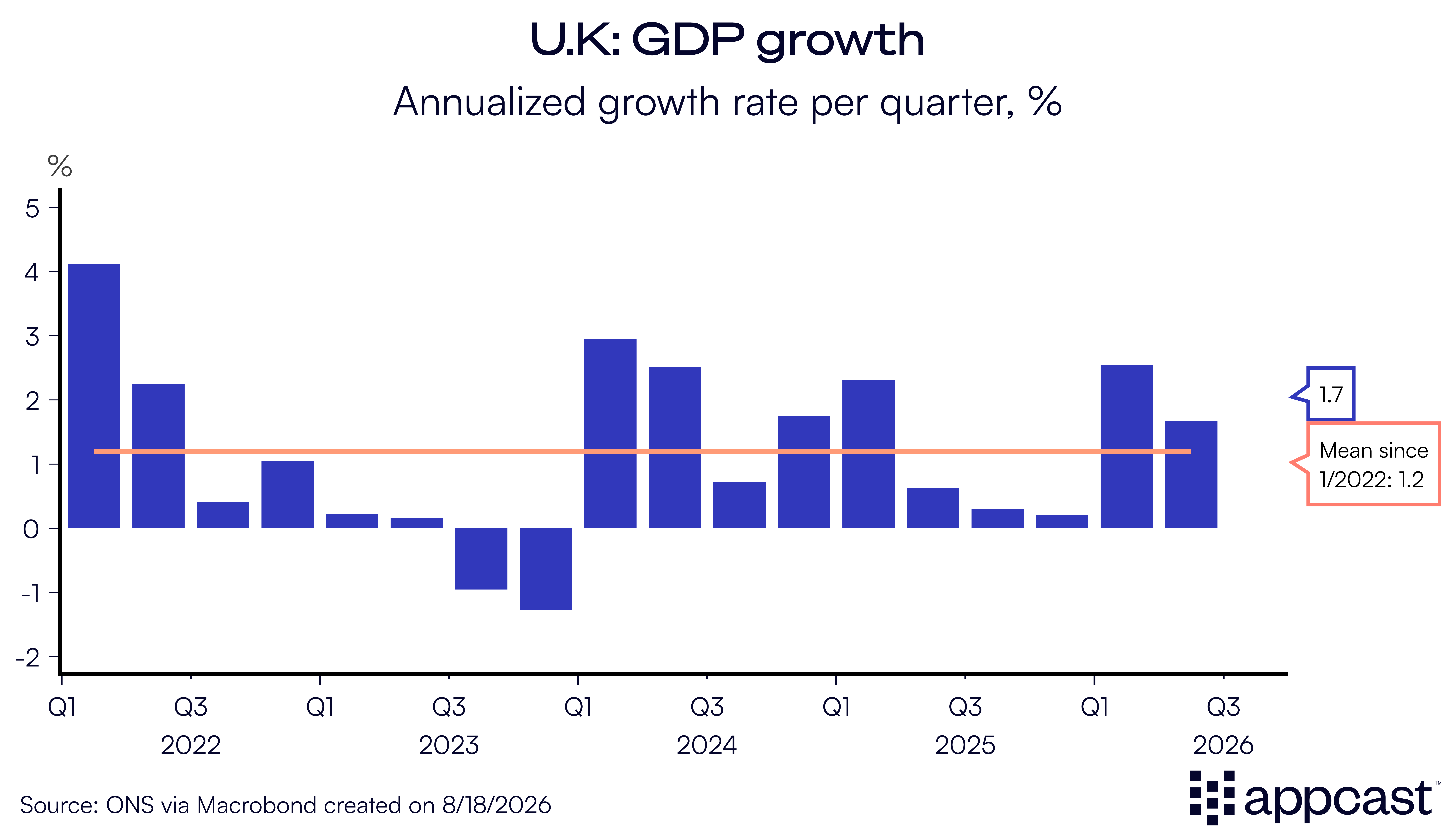
GDP figures offered some relief earlier this month as the U.K. economy beat expectations by a wide margin. Growth came in at an annualized rate of 2.5% in the first quarter and 1.7% in the second quarter of this year. Just like for the English soccer team, though, a solid performance in the first half is typically followed by a stark second-half collapse. This has been the case for several years in a row, and this year is unlikely to be any different. Economists expect that the negative growth effects from the oil price shock will materialize in the coming months as household energy bills continue to rise. Furthermore, both businesses and consumers will be careful with their spending decisions in the weeks to come as they anxiously await the next Labour Budget. While some economists have wondered whether the Office for National Statistics (ONS) is not getting its seasonal adjustment right, it is more likely that the U.K. GDP figures in recent years have been subject to a political cycle: the two previous Autumn Budgets have been surrounded by extreme policy uncertainty, dragging down the economy in the second half of the year. And before Labour was in power, Liz Truss damaged the economy tremendously with her ill-advised mini-budget in September 2022, and was ousted as prime minister shortly thereafter. The recurrent growth drag after summer has been due to a combination of bad luck and bad policymaking rather than anything else.
…but the labor market continues to shed jobs
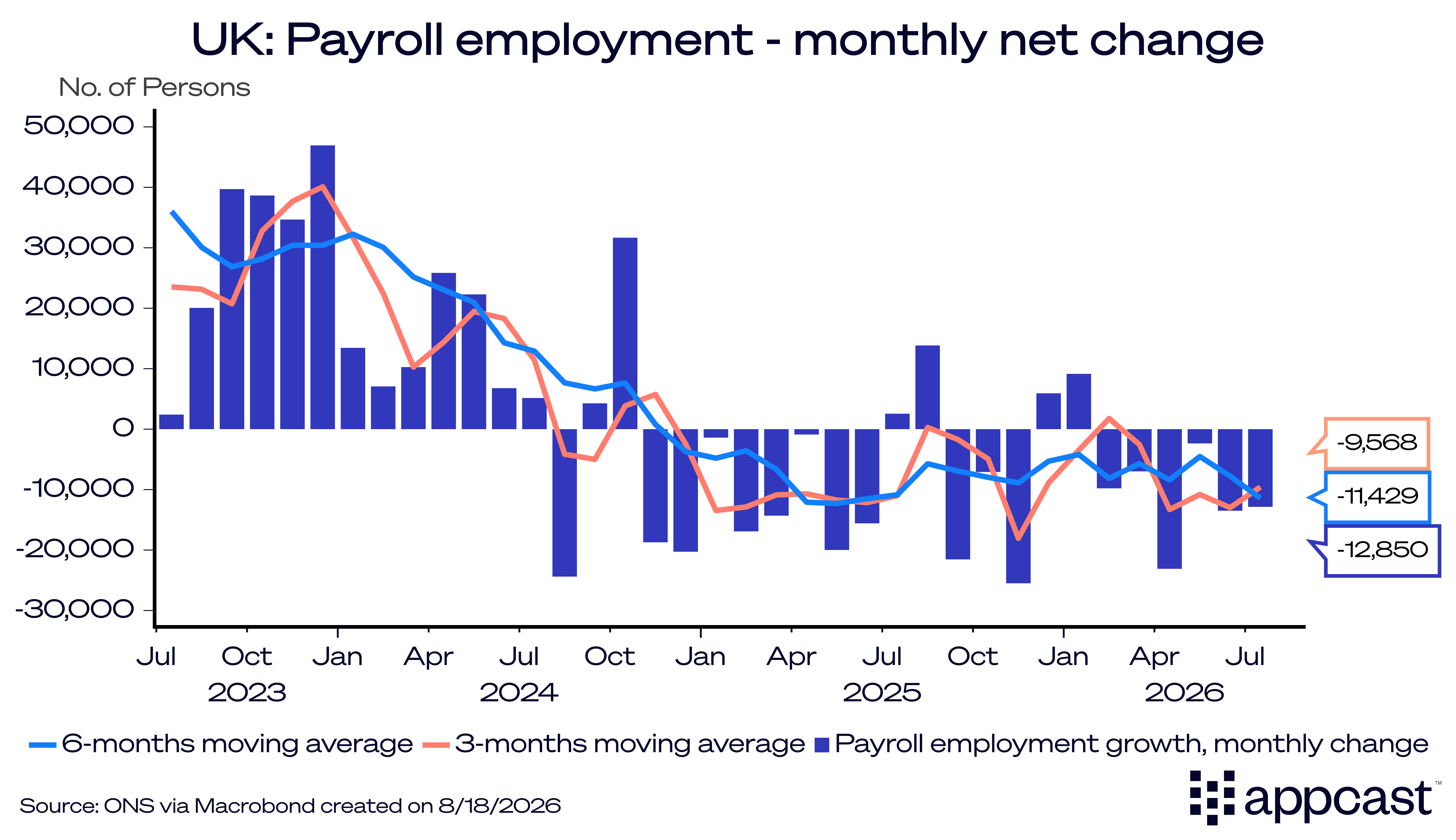
July’s job numbers show that close to 13,000 jobs have been lost, while the numbers for the June jobs report were revised down and now show a similar decline of 13,000. This brings the cumulative job loss since the fall of 2024 to about 190,000.
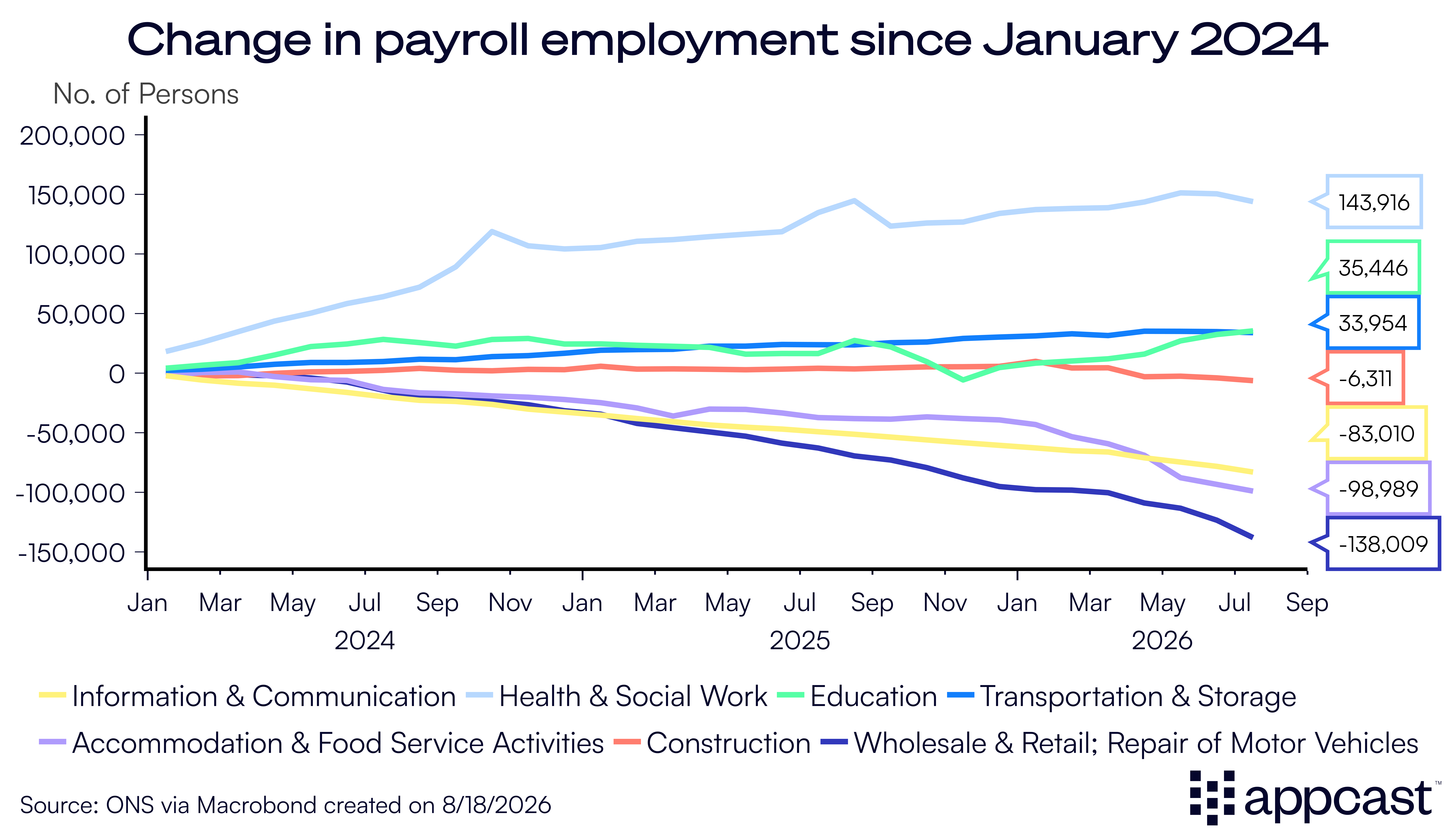
The sectoral composition of the job losses remains unchanged. Retail is down by about 140,000 since January 2024, and hospitality by 100,000. Most other industries are stagnant, except for the tech sector (information and communication), which has lost some 83,000 jobs since then. As in many other advanced economies, healthcare remains the biggest source of job creation in the U.K., adding about 145,000 jobs over the last two-and-a-half years.
Labor demand keeps falling even as the unemployment rate is steady
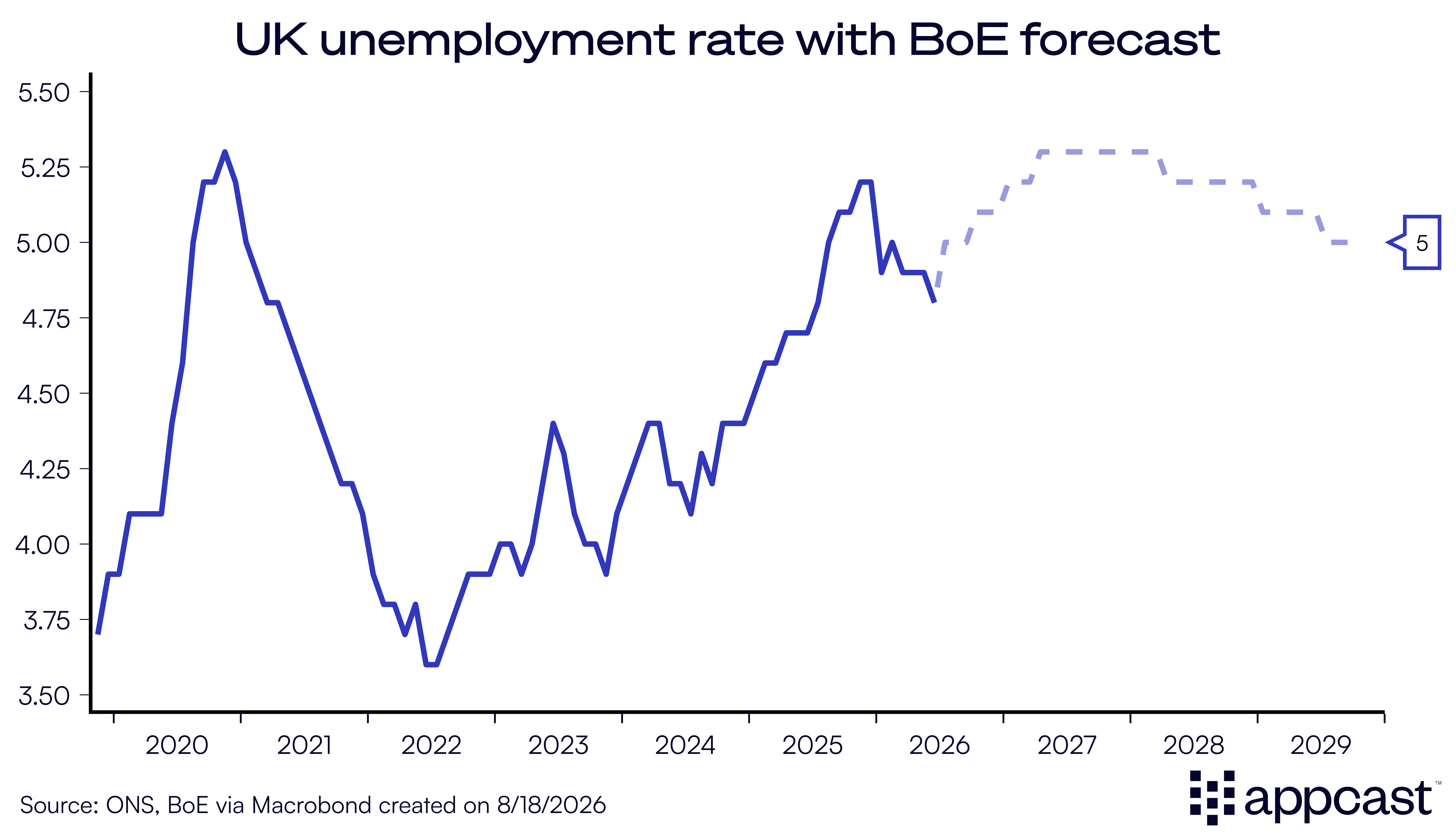
The unemployment rate remains steady at 4.9%, defying the more pessimistic forecast from the Bank of England (BoE) for now. While monetary policymakers project a gradual increase to 5.3% by the end of the year, it now looks more likely that unemployment will hover around 5% for the time being, as has been the case since the spring.
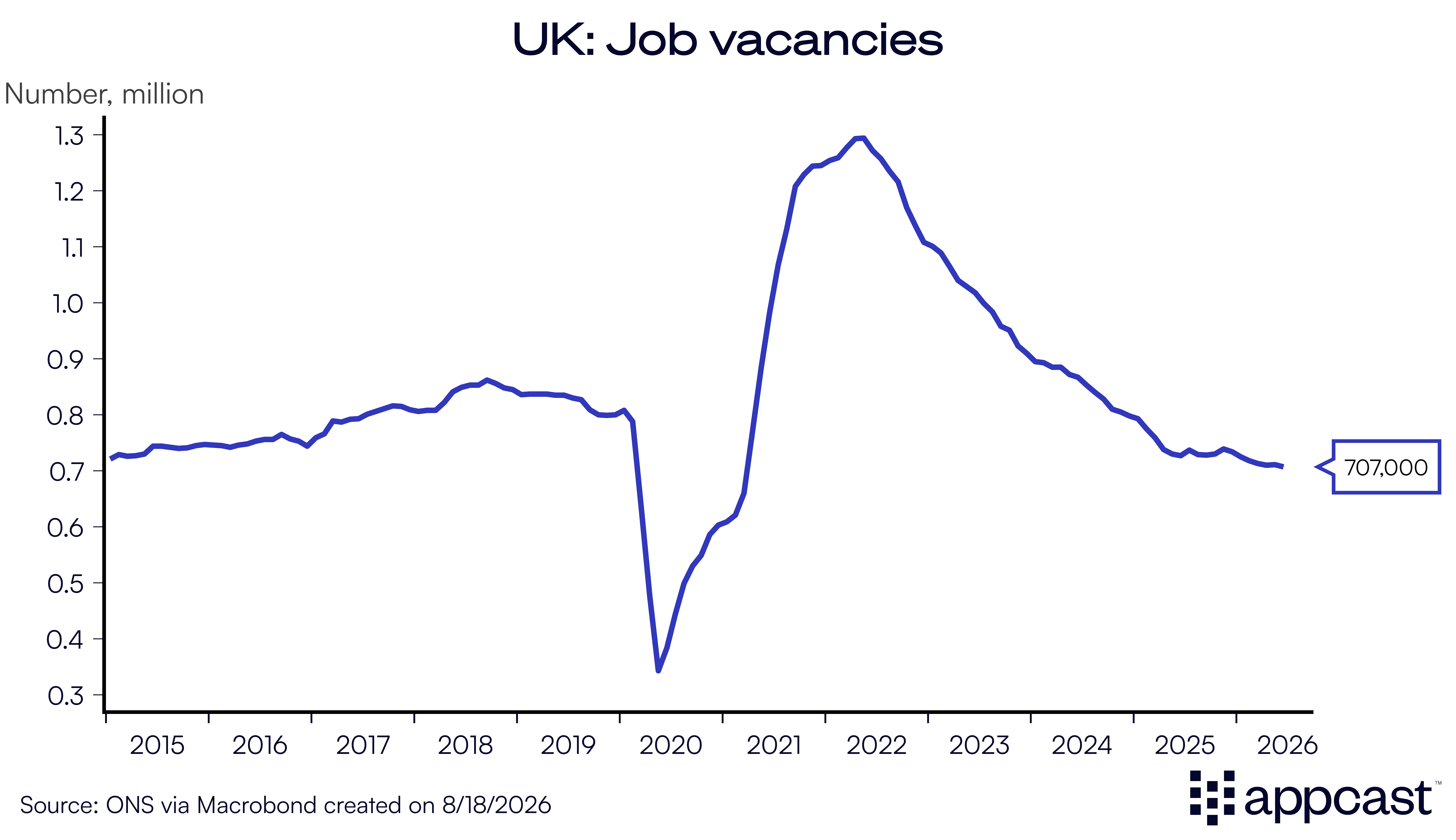
Meanwhile, labor demand is still falling as employers dial back recruitment. The total number of vacancies in the U.K. fell to 707,000 — the lowest value since 2015. Worker churn in the U.K. has come to a standstill, with companies refraining from hiring and workers unable to switch jobs. For jobseekers, this is simply a terrible market. And the lack of labor market dynamism will cost the economy dearly in the years to come if we do not see an uptick anytime soon.
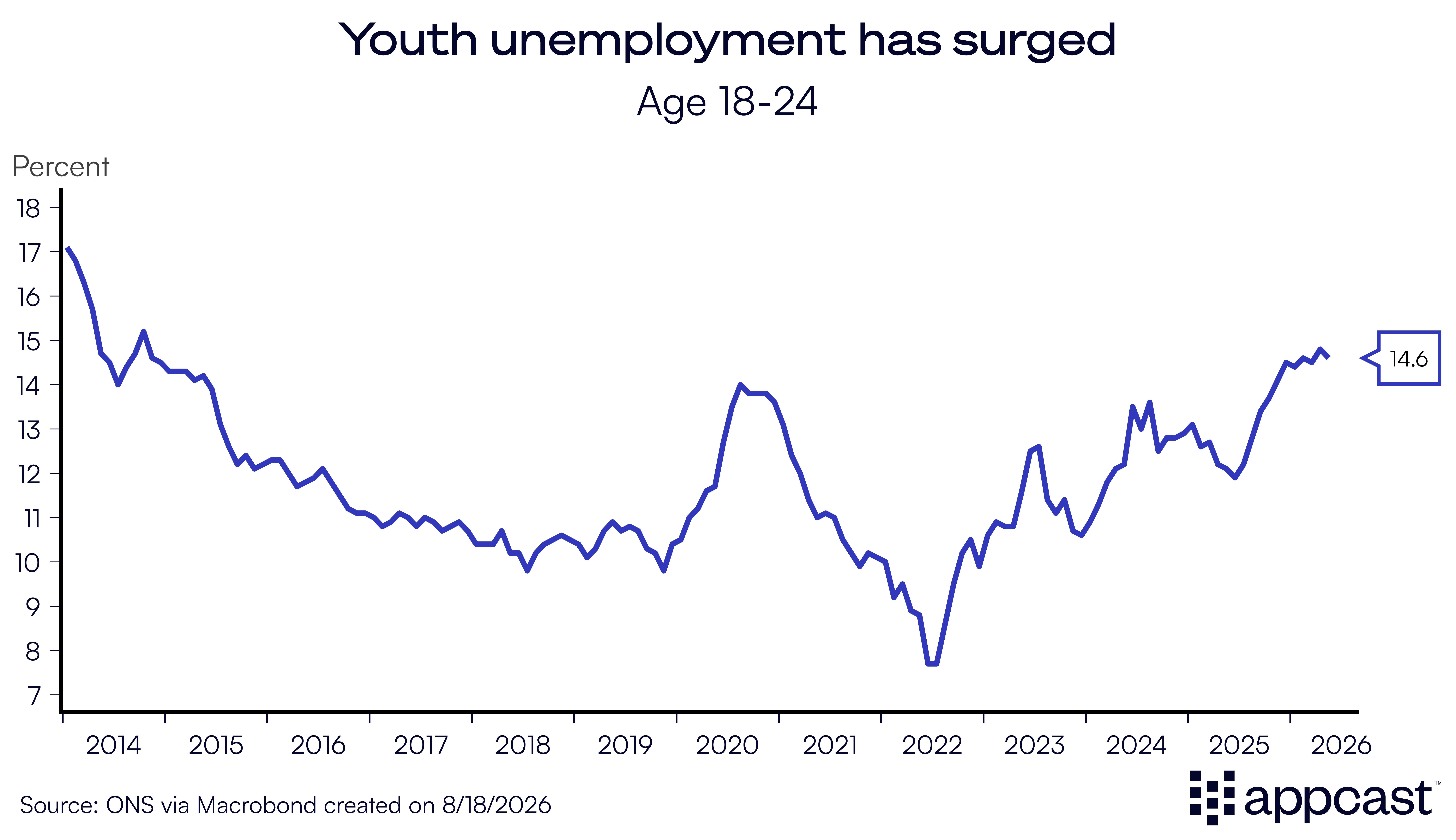
Young workers are suffering the most from the labor market slowdown. The National Insurance Contribution increase and the minimum wage hike under Labour have led to surging employment costs, with retail and hospitality cutting down part-time roles and summer roles that have historically offered opportunities for younger people. Youth unemployment has jumped to about 14.6% as a result, its highest value since the years following the Global Financial Crisis. The much higher prevalence of remote work since the pandemic and AI adoption are two additional headwinds for graduates, aggravating Britain’s youth job crisis.
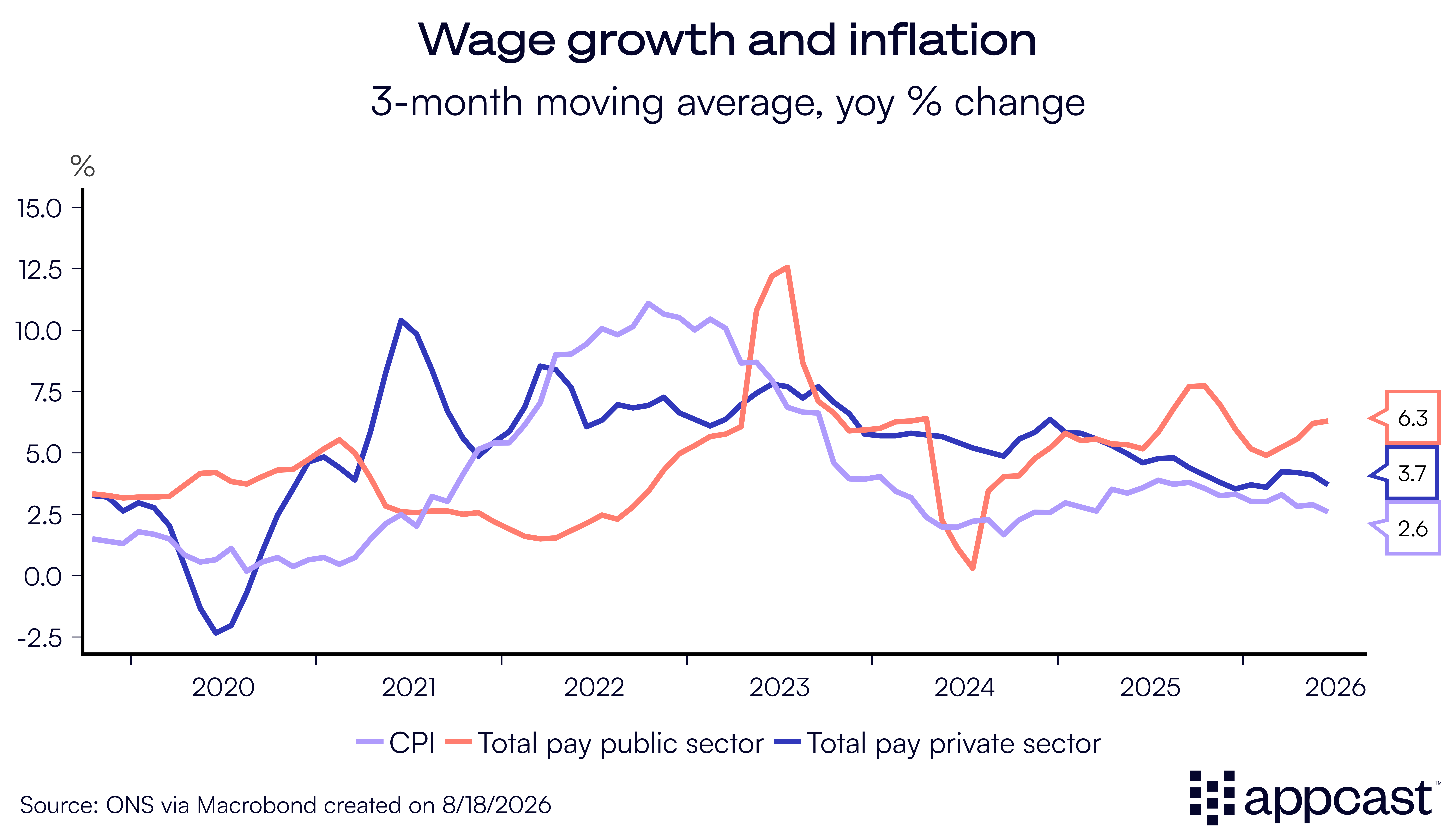
Wage growth continues to moderate. No surprise there, given the weakness of the labor market. There is a strong divide between private and public sector pay, with the latter outperforming by about 2.5 percentage points. Lower pay gains are not good for workers, but the BoE will be relieved by the lack of wage pressures. It will allow for a more moderate monetary policy response following the oil price shock, as there is currently little indication that wages will drive up inflation further (so-called second-round effects).
What does this mean for recruiters?
GDP is going up even as payroll employment in the U.K. continues to fall. How is that possible? Well, it looks like British workers are becoming more productive. While it is too early to be certain, there are signs that AI adoption is leading to a productivity revival. Is AI then causing employment to fall? Perhaps for graduates — but the broader job losses, including for young workers, are concentrated in retail and hospitality, two sectors with little AI exposure. The sluggish labor market is the result of domestic policies and international headwinds like the oil price shock. As these effects are dragging on, Burnham’s government should pursue growth-friendly policies that support job creation rather than hinder it. For recruiters, this means job postings will keep attracting a large volume of applicants — so the challenge shifts to identifying the right candidate, while some well-qualified job seekers may be hesitant to move in such a sluggish economy.


